

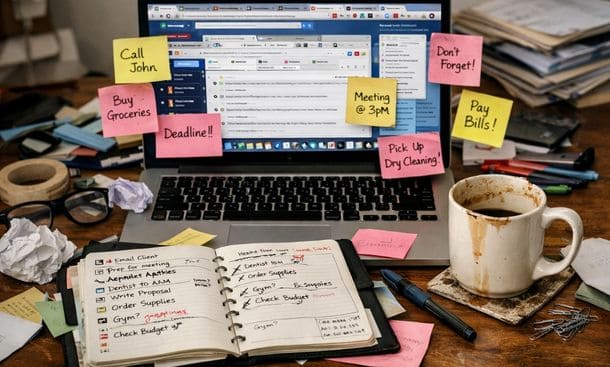
There’s a specific kind of exhaustion that comes with running a small business without any real system in place. It’s not the tired you feel after a long workout. It’s the tired you feel after spending 45 minutes searching through three different apps just to find a client’s feedback from last Tuesday.
I know that feeling well because I lived it for longer than I’d like to admit.
When i started freelancing and eventually built a small team around me, i thought i had it together. I had my emails, my notes app, a shared Google Drive folder with 47 subfolders that somehow made sense in my head, and a group chat that was equal parts business and memes. It worked until it didn’t.
The moment things started slipping through the cracks was the moment i realized that good intentions don’t replace good systems.
The real cost of running on chaos
Most small business owners underestimate what disorganization actually costs them. And i’m not just talking about money though that’s very much part of it.
Think about the last time a deadline snuck up on you. Or the last time two people on your team did the same task because nobody was sure who owned it. Or the last time a client asked for a status update and you had to spend 20 minutes piecing together an answer from three different places.
That’s not a people problem. That’s a system problem.
Research consistently shows that knowledge workers spend a significant chunk of their week often more than 25 percent just looking for information they already have. For a small business where every hour matters, that’s a brutal number.
And then there’s the mental load. Carrying every task, every deadline, every client note inside your head is exhausting. It creates a low-level anxiety that never really goes away because your brain knows it might be forgetting something. A proper project management system takes that weight off your shoulders and puts it somewhere you can actually see and manage it.
What a project management system actually does
People hear “project management system” and sometimes picture something overly corporate big enterprise dashboards built for Fortune 500 companies with dedicated IT departments.
That’s not what we’re talking about here.
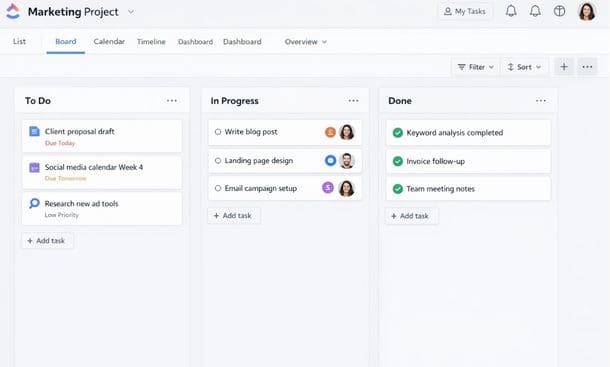
For a small business, a project management system is really just a shared space where your work lives. It’s where tasks get assigned, deadlines get set, files get stored, and progress gets tracked all in one place that everyone on your team can access.
The best ones are built to be simple. You don’t need a certification to use them. You just need a willingness to commit to the system and get your team onboard.
At its core, a good system helps you answer three questions at any given moment:
- What needs to get done
- Who is responsible for it
- When does it need to happen
That sounds almost too simple. But when you don’t have that clarity, everything downstream suffers communication, deadlines, client relationships, team morale.
The early stage startup trap
If you’re building something from scratch, there’s a temptation to think that systems are something you set up “later” once you have more people, more clients, more revenue.
That mindset is one of the most common mistakes i see founders make.
Here’s why. When you’re small, your habits become your culture. The way you handle tasks and communication and accountability at five people is the foundation you’re building for twenty. If that foundation is shaky, scaling just makes the cracks bigger.
Starting with a project management system early even when it feels like overkill means you’re building something that can grow with you instead of something you’ll eventually have to tear down and rebuild while everything is on fire.
The entrepreneurs and startup founders who get this early tend to move faster, not slower. They spend less time in reactive mode and more time actually building.
Signs you’ve outgrown your current setup
Not sure if you actually need a more structured system? Here are some honest signals that it’s time.
Your team is growing, even if it’s just by one or two people. The moment another person joins your operation, communication can no longer live in your head or in a single group chat. Things need to be documented and visible.
You’re missing deadlines or nearly missing them. If you’re regularly in “wait, that was due today?” territory, your current system isn’t catching things early enough.
Clients are asking for updates more than they should. If people are reaching out to check on progress, it usually means they don’t feel confident that things are moving. A system that gives you real-time visibility lets you proactively communicate status instead of scrambling to answer.
You feel like you’re always in reactive mode. If you spend most of your day responding to things instead of working on things, that’s a sign that priorities aren’t being managed they’re just happening to you.
You have no idea what your team is working on right now. This one is big. As a founder or team lead, not knowing the current status of your projects isn’t just uncomfortable it’s a leadership gap that a good system can close quickly.
Getting started doesn’t have to be complicated
One of the things that holds people back from adopting a project management system is the assumption that setup takes forever. It doesn’t have to.
You can start small. Pick one area of your business client work, content creation, product development and build a simple system around just that. Get comfortable with it. Then expand.
The goal isn’t to have a perfect setup on day one. The goal is to have something better than what you have right now and to build from there.
If you want to understand what a complete, well structured setup actually looks like before you dive in, this project management system built for small businesses breaks down the full picture from choosing the right tool to building workflows that actually stick.

Running a small business without a project management system isn’t impressive. It’s just hard in the wrong ways.
The entrepreneurs who move fastest and scale most effectively aren’t the ones who grind harder they’re the ones who build smarter infrastructure early. A project management system is one of the highest-leverage things you can put in place because it improves literally every part of how your business operates.
You don’t need to be a tech person to make it work. You don’t need a big budget. You just need to decide that you’re done running on chaos.
Once you make that decision, the next step is figuring out which tool actually fits your business and that’s exactly what we break down in our guide on how to choose the right project management software for your small business.
Start there. You’ll thank yourself later.
About the Author

Pamela
Pamela is a dynamic professional with a deep passion for SaaS and emerging technologies. She provides valuable insights into software trends, digital innovation, and cutting-edge tools that empower businesses to thrive and expand.
Did you find this helpful?
Your feedback helps us curate better content for the community.