

There is a version of getting organized that makes your business harder to run. You sign up for a tool that promises to do everything. You spend a weekend building out your workspace. You create folders inside folders, color-coded labels, automated workflows, and a dashboard that looks genuinely impressive. Then Monday arrives and nobody uses it including you.
That is not a discipline problem. That is a complexity problem.
Most small business owners who struggle with project management software are not struggling because they chose the wrong tool. They are struggling because they chose a tool built for a completely different scale of operation and then blamed themselves when it did not fit.
Simple project management software exists for a reason. And for small businesses specifically that reason is more strategic than most people realize.
The myth that more features equal better results
There is a persistent assumption in the SaaS world that a more feature-rich tool is automatically a more valuable one. Enterprise software companies have spent decades reinforcing that idea because their revenue depends on it.
For a 50-person company with a dedicated operations team and an IT department that handles onboarding sure. More features might actually get used. But for a five-person startup or an independent contractor managing six clients simultaneously the math works differently.
Every feature your team does not use is not neutral. It is friction. It is one more button to ignore, one more menu to skip past, one more decision about whether this task belongs in this view or that one. That friction compounds quietly over weeks until the tool that was supposed to make your life easier becomes something you dread opening.
The entrepreneurs who get the most out of project management software are almost never the ones using the most sophisticated platforms. They are the ones using the simplest tool that covers their actual needs and using it consistently.
What simplicity actually means in a project management tool
Simple does not mean basic. That distinction matters.
A simple project management tool does a small number of things exceptionally well. Task creation is fast. Ownership is clear. Deadlines are visible. Progress is trackable without a training session. The interface does not require a manual to navigate and a new team member can be productive inside it within an hour of signing up.
Basic means stripped down to the point of being limiting. Simple means deliberately focused.
The difference shows up in practice. A basic tool forces you to work around its limitations constantly. A simple tool removes the decisions that slow you down so you can focus on the work itself.
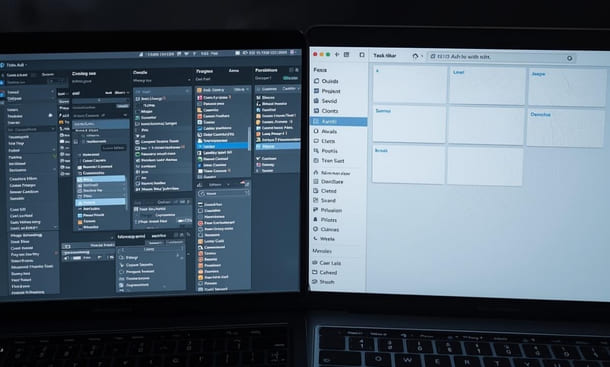
When a small business owner tells me they tried project management software and it did not work for them I always ask the same question: did it feel like the tool was working with you or against you? The answer is almost always the same. Against.
That feeling is not subjective. It is a measurable outcome of poor fit between tool complexity and team size.
The real cost of choosing the wrong complexity level
Wasted setup time is the obvious cost. You spend hours building a system that never gets fully adopted and eventually gets abandoned. That time does not come back.
But the less visible cost is what happens to your team’s relationship with the idea of getting organized. Every failed tool implementation makes the next one harder to sell internally. Your team becomes more resistant. You become more skeptical. And the real work the client deliverables, the deadlines, the follow-ups — keeps running on the same broken informal system because the alternative has let you down too many times.
That is the cycle that simple project management software breaks. Not because it is magical but because it removes the barrier to entry low enough that people actually start using it and keep using it.
A contractor I know in New York spent two years cycling through project management tools. Asana, then monday.com, then a custom Notion setup that took three weeks to build. Nothing stuck. He finally landed on a tool so straightforward that his subcontractors none of whom are particularly tech-savvy started updating their task statuses from their phones on job sites. The tool did not win because it had more features. It won because it asked less of the people using it.
Why adoption is the only metric that matters
You can have the most sophisticated project management system in your industry. If your team is not using it consistently it is worth exactly nothing.
Adoption is the metric that determines whether any operational tool delivers value. And adoption is directly tied to friction. The more steps between a team member and the action they need to take logging a task, updating a status, attaching a file the less likely they are to take it.
Simple project management software wins on adoption because it shortens that distance. The learning curve is shallow enough that people do not need training to get started. The interface is clean enough that finding what you need does not require a search. The daily habit of opening the tool and doing something inside it forms faster and breaks less often.
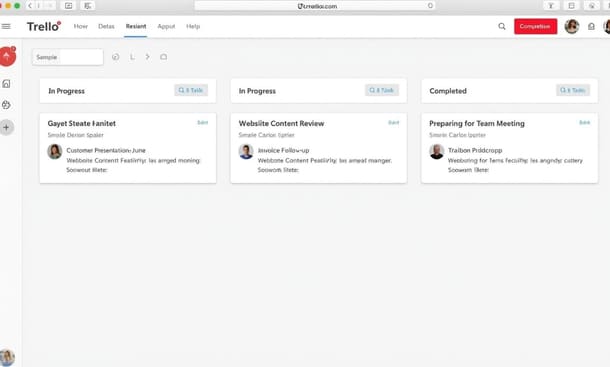
For a small business where everyone is already wearing multiple hats the bar for tool adoption is lower than it is at a large company. People do not have time to learn something new on top of everything else they are managing. A tool that takes three days to figure out will lose most of your team before it ever delivers any value.
The specific types of small businesses that benefit most
Not every business has the same relationship with complexity. A solo freelance writer managing her own editorial calendar has different needs than a five-person creative agency managing twelve active client projects simultaneously.
But across different business types there are consistent patterns in who benefits most from deliberately simple project management software.
Independent contractors benefit enormously because their work is often fast-moving and client dependent. They need to see what is due, who they are waiting on, and what comes next without navigating a system built for a team of twenty.
Early-stage startups benefit because their workflows are still evolving. A complex system built around processes that will change in three months is a liability not an asset. A simple system is easier to adapt as the business figures out how it actually operates.
Service businesses agencies, consultants, architects, attorneys benefit because their project management needs are fundamentally about visibility and communication rather than resource allocation or capacity planning. Simple tools handle those needs well without the overhead.

What to look for when simplicity is your filter?
Once you decide that simplicity is the right starting point the evaluation process changes. Instead of comparing feature lists you start asking different questions.
How long does it take a new team member to be productive inside this tool without any training? If the honest answer is more than a day something is off.
Can you see the status of every active project in under 60 seconds? If you need to click through multiple layers to get a clear picture of where things stand the tool is adding complexity not removing it.
Does the mobile experience work well enough to be used on a job site or between meetings? For a lot of small business operators the phone is the primary device and a tool with a broken mobile app is a tool your team will stop using outside of office hours.
Is the free plan or entry-level pricing actually functional for a small team or does it lock everything useful behind an expensive tier? Simplicity should not come with a premium price tag attached.
These questions cut through most of the noise in a crowded market and point you toward tools built with your scale in mind rather than tools that have been retrofitted with a “for small business” label.
Understanding what simple project management software for small business actually looks like across the leading platforms in 2026 gives you the full picture before you commit to anything because the right tool is the one you will still be using three months from now, not just the one that looks cleanest in a demo.
Complexity is not sophistication. For a small business running lean with a small team and real deadlines the simpler your operational tools are the faster and more consistently your team will use them.
That consistency showing up inside the tool every day, updating tasks, tracking progress, closing out work is what separates businesses that feel organized from businesses that actually are.
The entrepreneurs who figure this out early stop chasing the most powerful tool and start looking for the most usable one. That shift in thinking is usually where things start to click.
Once you know why simplicity matters the next question is how to find the right simple tool for your specific operation and that comes down to a clear decision framework that most comparison guides skip entirely. The fastest way to build that framework is by understanding how to choose simple project management software without wasting weeks on trials that lead nowhere.
About the Author

Pamela
Pamela is a dynamic professional with a deep passion for SaaS and emerging technologies. She provides valuable insights into software trends, digital innovation, and cutting-edge tools that empower businesses to thrive and expand.
Did you find this helpful?
Your feedback helps us curate better content for the community.