
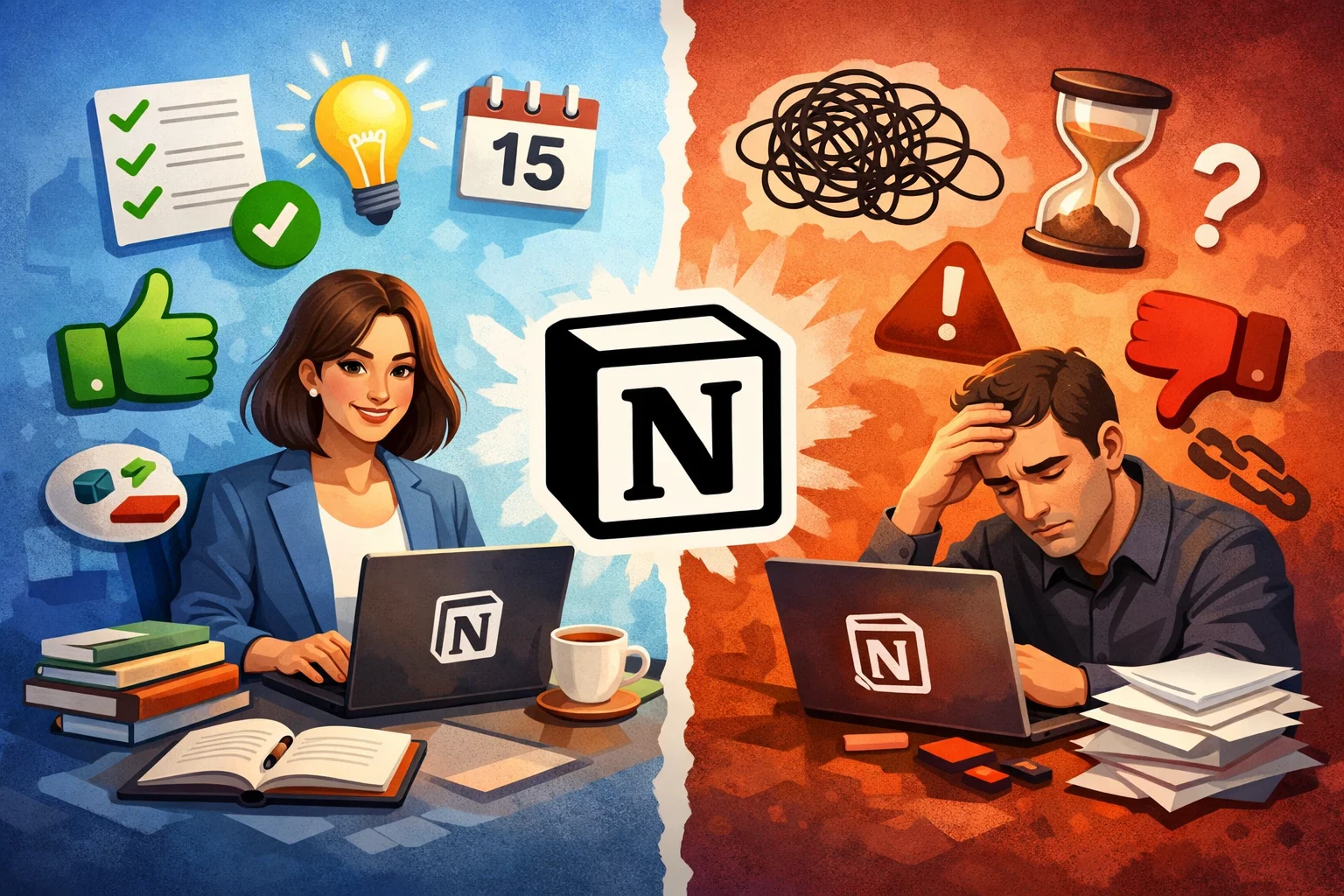
Notion has built a strong reputation as one of the most flexible productivity tools on the market. Entrepreneurs, creators, and startups often praise it for replacing multiple apps with a single workspace. At the same time, some teams struggle with its lack of structure and automation.
Understanding the real pros and cons of Notion helps you decide whether it fits your workflow or becomes another tool you abandon after a few weeks.
the pros of using notion
all-in-one workspace
Notion combines notes, documents, databases, task management, and wikis in one place. Many teams replace tools like Google Docs, Trello, and internal knowledge bases with a single Notion workspace.
This consolidation reduces context switching and keeps information easy to find.
extreme flexibility
Notion adapts to how you think. You can design your own dashboards, workflows, and systems without being locked into a predefined structure. This is especially valuable for entrepreneurs whose processes change often.
You can manage projects, content calendars, CRM-style databases, and personal planning using the same tool.
clean and intuitive interface
Notion feels calm and modern. Pages are easy to read and edit. Even complex systems remain visually simple, which helps reduce cognitive overload.
For non-technical users, this ease of use is a major advantage.
strong collaboration features
Real-time editing, comments, mentions, and permissions make Notion suitable for small and mid-sized teams. It works well with freelancers, remote teams, and collaborators who need shared context.
generous pricing
Notion’s free and low-cost plans offer real value. Solo users and small teams can use it extensively without a large financial commitment.
You can try Notion for free using this affiliate link:
https://affiliate-link-notion.com
the cons of using notion
weak automation and reporting
Notion is not built for complex automation. Compared to tools like Jira or ClickUp, its native automation is limited. Reporting also requires manual setup and maintenance.
Teams that rely heavily on metrics may find this frustrating.
lack of enforced structure
Flexibility can turn into chaos. Without clear rules or ownership, Notion workspaces often become messy over time. This is common in growing teams.
performance issues at scale
Very large databases and complex pages can feel slow. Notion works best for small to medium workloads, not massive enterprise-level systems.
not ideal for technical teams
Engineering teams often find Notion too loose for issue tracking, sprint planning, and release management. It lacks native tools for those workflows.
final verdict on notion
Notion is best for entrepreneurs, creators, and startups that value flexibility, clarity, and consolidation. It shines as a thinking and planning tool, and works well for lightweight project management.
If your business depends on strict processes, automation, or technical execution, Notion may feel limiting.
Best for: solo founders, content teams, agencies, early-stage startups
Try Notion here: https://affiliate-link-notion.com
About the Author

Norman
Tech enthusiast and SaaS strategist helping startups choose, build, and scale digital tools that drive real growth through automation and smart systems.
Did you find this helpful?
Your feedback helps us curate better content for the community.