
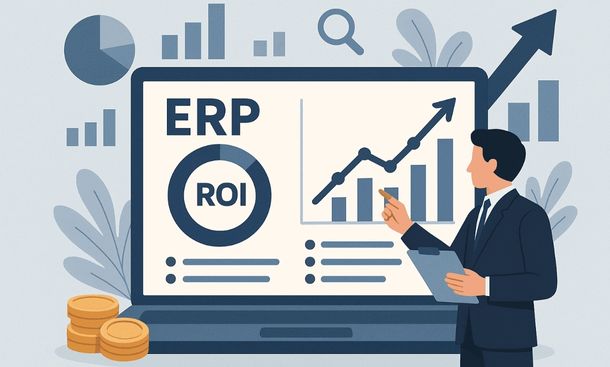
Many entrepreneurs invest in an ERP because they want control over their business. They want clear numbers. They want processes that do not fall apart when the company grows. Still it can be hard to know if the system delivers real value. After years studying SaaS tools I learned that intuition is not enough. Teams need numbers they can trust. Choosing the right ERP ROI metrics makes everything clearer. You start to see patterns. You understand where the system helps and where it slows things down. Most of all you gain the confidence to improve operations with purpose.
Why ROI matters for small businesses
Small businesses run with tight margins. Every tool must prove its worth. An ERP brings structure but it also brings cost. Licenses, setup work, user training and process changes all represent investments. Measuring ROI is not about pressure or judgment. It is about clarity. When you track the right indicators you understand if the system supports growth or if it needs adjustment.
ROI is not only about money. It is also about time saved, errors reduced and data improved. These elements add up. They create the foundation for smarter decisions. Clear metrics become a shared language across the company. Everyone knows what “success” looks like.
Start by defining what improvement means to you
Every business is different. A retail shop needs better stock accuracy. A service company focuses on project cost control. A manufacturer looks at throughput. Measuring ERP ROI begins with defining your own goals. Do you want faster reporting? Fewer manual entries? Better customer response time? Choose goals that solve real pain points.
Once you select the outcomes that matter most you can attach metrics to them. A business that struggles with order delays tracks order cycle time. A company with inventory issues checks stock turn accuracy. This approach keeps ROI grounded in daily work. It avoids vague ideas and brings focus.
Track efficiency metrics to understand time savings
Efficiency is often the first major gain after an ERP rollout. Users spend less time searching for files. They avoid double entry. They approve tasks faster because workflows are unified.
Useful efficiency metrics include:
-
Time to enter a new order
-
Time to reconcile monthly accounts
-
Number of manual corrections per week
-
Time needed to prepare weekly operational reports
These numbers show how the ERP reduces effort. Small improvements have a big impact when repeated daily. When people save time they focus on higher value tasks. They stop fighting the system and start using it as a real tool.
Monitor accuracy to protect your operations
Data quality has a direct effect on productivity. Clean numbers make teams faster. Poor data slows everyone down. An ERP brings structure but accuracy depends on the people using it. Tracking accuracy shows if the system supports good habits.
Strong accuracy metrics include:
-
Error rate in order entry
-
Inventory mismatch between system and physical count
-
Number of incorrect invoices sent to clients
-
Supplier data accuracy rate
These metrics reveal if users understand workflows. They show whether the training was effective. A drop in errors after the ERP launch is a clear ROI sign. Better accuracy also protects relationships with clients and suppliers.
Measure financial impact to assess real returns
Financial indicators give a more traditional view of ROI. Some improvements appear quickly. Others take months. The important part is consistency. When you track the same financial metrics every month you see evolution clearly.
Useful financial ERP ROI metrics include:
-
Cost of manual processing before and after ERP
-
Reduction in overtime related to administrative tasks
-
Stock carrying costs
-
Total value of obsolete inventory
-
Invoice collection time
These numbers show whether the ERP strengthens cash flow and reduces waste. A shorter collection time can free important cash. Better inventory visibility reduces unnecessary purchases. These gains accumulate.
Evaluate customer experience gains
Customer satisfaction often improves after teams adopt a structured ERP. Orders become more accurate. Delivery times become more predictable. Support teams have faster access to information. Measuring these improvements helps you understand the ERP’s external impact.
Customer related metrics include:
-
Order accuracy rate
-
On time delivery rate
-
Time to respond to customer inquiries
-
Number of customer complaints per month
Better customer experience translates into repeat business. It also boosts referrals. For small businesses this ROI can be more valuable than any internal gain.
Track adoption to ensure long term success
An ERP generates value only when people use it correctly. Adoption metrics show if teams embrace the system or avoid it. Low usage points to training gaps or workflow confusion. High adoption shows the ERP fits naturally into daily tasks.
Key adoption metrics include:
-
Logins per user per week
-
Completion rate of ERP workflows
-
Number of support requests linked to basic tasks
-
Use of advanced features
Adoption should rise slowly. People need time to adjust. When users feel comfortable they stop relying on old tools. They trust the ERP to guide their day.
Create a simple dashboard everyone understands
A good dashboard helps teams stay focused. Use clear metrics. Avoid complex formulas. A simple view encourages discussion. It creates a shared mindset. People see progress and feel proud of it. They also notice problems early. When a metric shifts in the wrong direction teams adjust quickly.
A dashboard also keeps leadership aligned. It becomes a stable reference. Everyone sees the same truth. This builds trust across the business.
Review metrics monthly to stay on track
Monthly reviews help you stay consistent. They also reduce stress. Problems feel smaller when addressed early. Celebrate improvements. Learn from setbacks. ROI is not a fixed number. It grows as processes improve and people become more skilled with the system.
You can also adjust metrics over time. As your business expands priorities change. The ERP should follow that evolution. Reviewing ROI keeps the system aligned with your goals.
ERP ROI becomes clear when you track the right indicators. Efficiency, accuracy, financial impact and user adoption show whether the system supports your growth. A simple dashboard helps teams stay focused and improves collaboration. If you want to go deeper on how ERP shapes daily work you can explore the article on cloud ERP vs on premise, which explains how the deployment model influences long term performance.
About the Author

mike
Mike is a tech enthusiast passionate about SaaS innovation and digital growth. He explores emerging technologies and helps businesses scale through smart software solutions.
Did you find this helpful?
Your feedback helps us curate better content for the community.