
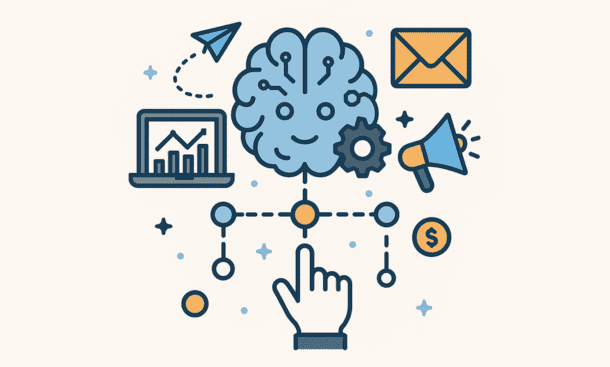
Growth becomes unpredictable when a business relies on manual tasks, inconsistent follow-ups, and scattered marketing processes. Many teams work hard yet struggle to scale because their systems depend on daily effort instead of structured workflows. Marketing automation changes this dynamic by replacing repetition with consistency and turning every stage of the customer journey into a measurable engine. When automation is implemented with intention, businesses gain more predictable revenue, clearer customer insight, and the ability to scale without increasing workload.
The promise of automation is not only saving time. It is building a system capable of guiding prospects from discovery to purchase through a series of well-timed interactions. When the right message reaches the right person at the right moment, conversion becomes systematic rather than accidental. This pillar explains how automation supports sustainable growth, starting with the fundamentals and leading into advanced systems that strengthen acquisition, nurturing, and retention.
The core principles behind marketing automation
A predictable automation system begins with a clear framework. Many companies jump directly into tools without understanding the principles that keep a system stable. When the foundations are weak, workflows become confusing, segments overlap, and messages lose relevance. Strong systems are built on four pillars: segmentation, timing, relevance, and data feedback.
Understanding segmentation as the foundation
Segmentation determines how well your message fits your audience. Instead of placing prospects into one broad list, automation relies on specific behavioral and demographic groups. These segments reflect differences in awareness, motivation, and readiness to buy. They can be built from browsing behavior, past purchases, engagement history, or stated preferences. When segmentation is accurate, communication feels personal even at scale.
Segmentation also prevents wasted effort. Messages that do not match the user’s intent lead to low engagement and lower deliverability. Systems with strong segmentation show consistent open rates, higher click-throughs, and smoother transitions across the journey.
Timing as a driver of conversion
Automation is powerful because it controls timing with precision. Human teams cannot follow up at the exact moment someone completes a key action, but automated systems can. Whether a lead downloads a resource, abandons a cart, or revisits a pricing page, the timing of your message determines how well you capture their attention. Immediate engagement increases the likelihood of progression because the prospect is still in a state of active interest.
Good timing also prevents fatigue. Over-messaging damages trust and pushes prospects away. Under-messaging leads them to forget your offer. Automated timing ensures each message respects natural buying rhythms—early nurturing is informative, mid-journey communication is supportive, and decision-stage messaging is direct and concise.
Relevance as the anchor of trust
Relevance determines whether your system feels helpful or intrusive. Messages gain relevance when they reflect what the user has already shown interest in. A prospect comparing solutions needs clarity, not generic education. A returning buyer needs personalized recommendations, not introductory explanations. Relevance builds trust by showing that you respect the user’s time and understand their needs.
High-performing automation systems use dynamic content that adjusts to each segment. Personalized product recommendations, tailored messaging, and behavior-based triggers all contribute to stronger engagement. When relevance becomes a priority, every interaction feels deliberate and valuable.
Data feedback as the engine of continuous improvement
Automation is not static. It evolves based on performance indicators. Data feedback allows you to correct small issues before they affect growth. If a sequence produces low engagement, the cause may be poor segmentation, irrelevant content, or timing misalignment. The feedback loop helps identify what must change and ensures the system adapts to real user behavior.
Engagement metrics, conversion signals, customer feedback, and retention data all contribute to this process. When data guides improvements, the system becomes more accurate, predictable, and efficient.
Bringing the principles together
When segmentation, timing, relevance, and data feedback operate together, automation becomes a growth engine rather than a collection of disconnected tasks. These principles guide every workflow you build moving forward. They ensure that your system remains clear, flexible, and aligned with customer intent.
Building Automated Lead Generation Systems
Strong marketing automation begins with predictable lead generation. A business cannot build meaningful workflows or personalized communication without a steady source of qualified prospects. The goal is not volume alone but relevance. Automation tools make this possible by streamlining how prospects discover your brand, interact with your content, and enter your pipeline.
Lead generation automation works when each step of the journey is intentional. The process moves from awareness, to engagement, to conversion into a contact your system can nurture. When done well, it reduces acquisition costs, increases consistency, and frees your team from repetitive tasks that drain time and focus.
A good automated lead generation structure has several essential components.
Data-driven audience targeting
Every automated acquisition system starts with clarity about who you want to reach. A broad approach produces noise, not leads. Precise targeting aligns your content, channels, and messaging with the people most likely to convert.
Tools that support segmentation allow you to define your ideal audience based on behavior, demographics, interests, or past interactions. Once in place, your system can adjust touchpoints based on real engagement rather than assumptions.
Audience targeting also allows you to control your ad spend with more precision. Automated bidding strategies can focus your investment on the segments that convert best. This strengthens the performance of acquisition channels such as paid search, paid social, and native networks.
Automated lead capture through high-value assets
The most predictable way to collect qualified contacts is through gated resources. These assets offer clear value and invite prospects to exchange their information for something useful. Traditional examples include guides, reports, checklists, and templates. More modern formats include quizzes, calculators, and interactive tools.
Automation strengthens this process by triggering instant follow-ups. Once prospects submit a form, systems can deliver the asset, tag the contact with relevant attributes, and initiate a personalized welcome sequence without human intervention.
Effective lead capture balances low friction with high perceived value. Forms must be simple, mobile-friendly, and relevant to the offer. A clear promise of what prospects gain increases completion rates.
Multi-channel acquisition sequences
Lead generation is no longer tied to a single source. High-performing systems rely on a combination of paid and organic channels that run continuously. Automation enhances each channel by synchronizing messages, tracking behavior, and unifying user data.
Key channels that benefit from automation include:
- Paid social campaigns that adapt messages to audience segments
- Email-based lead magnets that trigger nurturing workflows
- Search campaigns with responsive ads aligned with user intent
- Website pop-ups and on-page widgets that respond to visitor behavior
- Chatbots that answer questions and collect information in real time
When these channels work together, they create a cohesive experience. Prospects see relevant messaging at the right moment, which increases the likelihood of conversions.
Lead scoring to identify high-intent prospects
Not all leads are ready for direct outreach. Lead scoring solves this by assigning points based on signals such as page visits, downloads, email interactions, and content consumption. This creates an automated classification of cold, warm, and sales-ready contacts.
Scoring ensures your team invests time where it matters most. It also helps automate routing, sending qualified prospects to the correct salesperson or workflow. Over time, lead scoring improves accuracy as more data becomes available.
The logic behind scoring models should remain simple at first. Clear behavior-based rules are easier to optimize and less prone to errors. As you learn more about what strong engagement looks like, you can refine the model without disrupting your existing systems.
Intent-based follow-up and nurturing
Acquisition is only the first step. Nurturing is where automation provides its strongest advantage. Once prospects enter your system, automated workflows guide them through relevant content that matches their needs and stage in the buying cycle.
A structured nurturing sequence might include:
- Welcome messages
- Contextual educational content
- Case studies or success stories
- Soft calls to action
- Occasional surveys to learn preferences
Each interaction builds familiarity and trust. Importantly, automation ensures follow-ups happen consistently and on time. This would be difficult to manage manually, especially at scale.
Each nurturing action is an opportunity to track deeper intent. When a prospect interacts with high-value content, your lead scoring model reinforces their priority level for your sales team.
Building a scalable lead engine
The ultimate goal is to create a system that grows with your business. Scalability comes from predictable processes, clearly defined stages, and continuous optimization.
A scalable lead generation engine:
-
Produces contacts daily
-
Maintains alignment between content and intent
-
Responds instantly to prospect actions
-
Adapts as markets or customer behaviors evolve
When the acquisition foundation is strong, every other automation initiative performs better. Email workflows convert more effectively, retention programs become smoother, and insights become clearer.
Designing automated email and messaging workflows
Strong communication flows keep a business connected with prospects and customers without demanding constant manual work. When these sequences are structured around real behavior, they feel natural and helpful rather than mechanical. Effective workflows guide people through the stages of awareness, education, and decision, using timing and relevance as the foundation.
A messaging system starts with clear intent. Each sequence must have a single purpose: nurturing a new lead, activating someone who has shown interest, or supporting a recent buyer. When the purpose is defined, the rest becomes easier to build and optimize.
Understanding behavioral triggers
The strength of a communication flow comes from understanding what people do, not only who they are. When someone downloads a document, watches a video, or visits a key page, those actions reveal where they stand mentally. These moments become natural triggers for sending tailored messages.
Timing matters as much as content. A well-timed message supports the person’s momentum. Too soon and it feels rushed. Too late and the interest fades. Clear trigger settings protect the customer experience and maintain trust.
Crafting sequences that feel human
Automation should not erase personality. The messages should reflect how a real person would speak — direct, helpful, and relevant. The tone should be consistent with the brand and avoid unnecessary complexity.
Short introductions, clear points, and a simple call to action guide the reader without pressure. When communicating with warm leads, the goal is clarity, not persuasion. People respond better to confident, transparent communication.
Examples of useful sequence structures include:
- education flows that introduce the core problem and offer solutions;
- consideration flows that address questions or doubts;
- purchase flows that simplify the final step;
- post-purchase flows that help customers get value quickly.
Using channels beyond email
Messaging tools, SMS, and in-app notifications can complement email when used with intention. Each channel has a strength: email carries detailed information, SMS delivers urgency, and in-app prompts support usage behaviors. The objective is not to use every channel, but to use the right channels based on customer habits.
A balanced mix creates a natural rhythm that maintains attention without feeling overwhelming.
Automating customer retention and loyalty programs
Growth depends on keeping existing customers engaged, not only acquiring new ones. Retention systems reduce friction, strengthen trust, and encourage repeat behavior. With the right structure, they run consistently and help stabilize revenue.
A retention strategy begins with understanding the journey after the first purchase. The experience must support customers during setup, usage, and renewal. When these stages are automated thoughtfully, people feel guided rather than left on their own.
Strengthening the first days after purchase
Early interactions determine how customers feel about their decision. A smooth onboarding sequence reduces confusion. It should show how to get started, highlight common benefits, and offer simple steps for reaching the first meaningful result.
Clear support paths also matter. Customers should always know where to find help. When they feel supported, they stay longer.
Identifying signs of declining engagement
Retention improves when teams understand early signs of disengagement. Missed logins, reduced usage, or long periods without interaction usually signal that a customer needs help. Automation can send gentle check-ins, tips, or reminders at these moments.
These are not promotional messages. They are support tools designed to protect the relationship.
Encouraging long-term loyalty
Loyalty grows when customers see consistent value. Reward programs, exclusive content, and personalized recommendations add depth to the experience. Automation helps deliver these benefits at the right time, without forcing the team to do repetitive work.
The goal is to build a stable cycle where engagement leads to satisfaction, and satisfaction leads to continued usage.
Measuring and optimizing automation performance
A system only improves when its performance is clear. Measurement provides the insight needed to adjust, simplify, or expand automation based on real behavior. When done consistently, it transforms the automation framework into a predictable growth engine.
Performance measurement does not require hundreds of metrics. It depends on a focused selection of indicators that reflect real outcomes. These include the percentage of leads that move forward, the strength of communication flows, and the health of long-term relationships.
Evaluating lead progression
Understanding how people move from first interaction to customer status highlights where the system performs well and where it needs refinement. If a large number of leads show interest but do not convert, the issue might be in the education sequence or the clarity of the offer.
Tracking progression shows where to focus.
Reviewing communication effectiveness
Open rates, engagement patterns, and message responses help determine whether the tone and content match customer expectations. Strong flows maintain steady engagement, while weak flows show signs of indifference.
Optimization often requires small adjustments — clearer subject lines, improved segmentation, or variations in timing.
Monitoring long-term engagement
Retention data reveals the overall stability of the business. When customers stay, revenue becomes predictable. Churn, on the other hand, signals friction or lack of value. Understanding these signals early allows teams to refine onboarding, improve support, and encourage continued usage.
Using insights for continuous improvement
Performance data is not a report. It is a decision-making tool. Every insight should lead to an action: simplify, improve, expand, or remove. When the system evolves based on evidence, growth becomes consistent.
Marketing automation strengthens a business when it creates structure, removes friction, and supports every stage of the customer journey. It is more than technology. It is a system that shapes how prospects discover your brand, how they buy, and how they remain engaged long after the first transaction. When built with strategic intent, it becomes a growth engine that operates consistently and scales without increasing complexity.
A strong automation framework follows a clear progression. It begins with foundational principles, continues with lead generation systems, expands through targeted email and messaging workflows, supports long-term retention, and is refined through continuous performance measurement. Each stage reinforces the next, creating a cycle of predictable growth.
The real advantage comes from alignment. When your data, messaging, workflows, and customer experience support a single objective, the system becomes stable and dependable. This stability allows your team to focus on innovation rather than repetitive tasks. It also gives customers a seamless journey that feels personalized at every step.
About the Author

Mateo
I’m Mateo, a SaaS blogger and digital strategist dedicated to helping startups accelerate growth through automation, data-driven decision-making, and performance-focused marketing systems. Over the past few years, I’ve worked with early-stage software companies to refine their go-to-market strategies, optimize conversion funnels, and implement scalable automation frameworks that drive measurable revenue growth. On my blog, I share proven insights from real-world SaaS cases, including actionable frameworks for churn reduction, onboarding optimization, and lead-to-customer conversion. My mission is simple: to empower founders and marketers with practical strategies that turn innovative software into sustainable, profitable success.
Did you find this helpful?
Your feedback helps us curate better content for the community.