
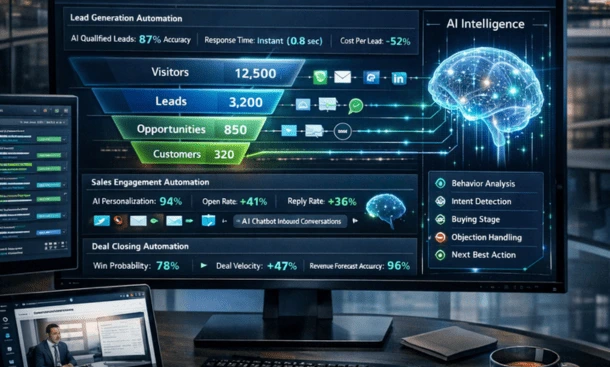
Sales automation has stopped being a competitive advantage and started being a survival requirement. Entrepreneurs watching competitors close deals faster, respond to leads instantly, and scale revenue without proportionally expanding headcount are discovering they can’t compete using manual processes anymore. The businesses winning in 2026 are those that figured out how to blend AI automation with human expertise so seamlessly that prospects can’t tell where the technology ends and the person begins.
This isn’t about replacing your sales team with robots. It’s about eliminating the repetitive tasks that waste 60 to 70 percent of your reps’ time so they can focus exclusively on activities that actually close deals. Manual data entry, lead research, email follow-up, meeting scheduling, and basic qualification drain hours daily that could be spent having conversations with people ready to buy.
The path forward requires understanding what AI can realistically accomplish, identifying which processes to automate first, choosing tools that actually work, and measuring results that matter.
What is AI sales automation and why it multiplies your revenue
AI sales automation replaces manual sales tasks with intelligent systems that handle lead qualification, outreach personalization, meeting scheduling, and pipeline management without constant human oversight. The technology combines machine learning with natural language processing to understand prospect behavior, predict buying intent, and execute multi-step workflows that adapt based on how people respond.
Traditional sales processes create a linear relationship between revenue and headcount. When you want to double sales, you need to double your team. This means more salaries, more training time, more management overhead, and more office space. The math works when you’re doing $500,000 annually with two reps, but it breaks completely when you’re trying to scale to $5 million or $50 million.
Automation breaks this relationship by handling thousands of interactions simultaneously without degradation in quality. A well-configured AI system engages 100 prospects as effectively as it engages 10, and it does this around the clock without taking breaks, calling in sick, or needing motivation.
The three mechanisms of revenue multiplication
Response speed improves dramatically because AI engages prospects instantly rather than making them wait hours or days for human follow-up. Research shows that responding within five minutes versus one hour reduces conversion probability by over 400 percent. Most businesses lose deals simply because they’re slow, not because their product or pricing is wrong.
Consistency eliminates the performance gap between your best and worst sales activities. Your top rep has great instincts about which prospects to prioritize, when to follow up, and how to personalize messaging. AI scales those best practices across your entire operation. Every prospect gets the treatment your best rep would provide, every single time.

Capacity expansion lets existing team members handle dramatically more pipeline. When automation eliminates qualification calls with tire-kickers, removes scheduling coordination, and handles routine follow-up, your reps gain 10 to 15 hours weekly for actual selling. That’s essentially doubling productive time without adding headcount.
A concrete example illustrates the compound effect. An entrepreneur running a $2 million business with three sales reps implements comprehensive automation. Response time drops from four hours to four minutes. Lead qualification happens through AI chat instead of 30-minute discovery calls. Meeting scheduling becomes one-click instead of six-email chains.
Six months later, the same three reps are managing $3.2 million in pipeline. They’re having twice as many meaningful conversations with qualified prospects because automation handles everything else. Customer acquisition cost dropped 35 percent because efficiency gains outpaced the $1,200 monthly spent on automation platforms. Revenue per rep increased from $667,000 to over $1 million without anyone working longer hours.
When automation makes sense for your business
Not every business benefits from sales automation immediately. You need consistent lead flow with at least 50 to 100 new prospects monthly. Below that threshold, manual processes work fine and setup time exceeds value extracted. The inflection point hits when your team spends more time on administrative work than actual selling.
Your sales process should follow a relatively predictable pattern even if details vary. If every deal is completely unique with custom pricing and one-off negotiations, automation has less to grab onto. The technology excels when there’s repeatable structure in how you qualify leads, conduct discovery, present solutions, and close deals.
You must have baseline systems established before automation amplifies them. That means a CRM where you actually track interactions, defined stages in your sales process, and documented best practices for outreach and qualification. Automation amplifies existing processes rather than creating them from scratch.
The trigger point typically occurs when sales team utilization drops below 40 percent. If your reps spend less than 40 percent of their time actually talking to prospects and more than 60 percent on research, data entry, scheduling, and administrative tasks, automation immediately improves productivity.
How to use AI for lead scoring and qualification that actually works
Lead scoring separates businesses that grow efficiently from those that waste resources chasing dead ends. Traditional scoring models assign points based on demographic data and basic behaviors, missing the nuanced signals that indicate real buying intent. AI analyzes hundreds of data points across multiple channels to identify patterns humans can’t spot at scale.
The failure of traditional lead scoring stems from its simplistic approach. Most companies use a point system where visiting the pricing page adds 10 points, downloading a whitepaper adds 5 points, and having a director-level title adds 15 points. When someone accumulates 50 points, they become qualified and get routed to sales.
This breaks down because it treats all behaviors as equally meaningful across different contexts. A startup founder downloading your enterprise pricing guide means something completely different than a Fortune 500 VP doing the same thing. The startup might be researching with no budget. The VP might be in active vendor evaluation with allocated budget.
How AI builds predictive models
AI lead scoring builds predictive models by analyzing your historical data to find patterns that correlate with closed deals. The system examines every prospect who eventually became a customer and works backward to identify commonalities in their behavior before purchase.
Maybe prospects who engage with specific blog posts within three days of signing up convert at three times the rate of those who don’t. Perhaps leads from certain industries close faster and at higher contract values. The AI identifies these patterns without you having to guess which factors matter.
Setup starts with data preparation. You need at least six months of historical lead data with clear outcomes showing which leads converted to customers, which went cold, and which are still in your pipeline. The data must include both firmographic information and behavioral data showing how prospects engaged with your content.
Most AI lead scoring platforms integrate directly with your CRM and marketing automation tools, pulling data automatically. Once the model runs, every lead gets a score typically ranging from 0 to 100 indicating their likelihood to convert. The challenge becomes deciding which scores warrant immediate sales attention versus nurturing through marketing automation.
Start by analyzing score distribution across leads that eventually closed. If 80 percent of your customers scored above 70 before they bought, that’s your threshold for sales-qualified leads. Prospects scoring 40 to 69 might be marketing-qualified leads needing more nurturing.
The data signals that predict conversions
Engagement recency matters more than engagement volume. Someone who visited your site five times this week is hotter than someone who visited twenty times last year. The AI weights recent activity heavily because it indicates active evaluation rather than passive awareness.
Content consumption patterns reveal buying stage. Prospects reading top-of-funnel educational content are in research mode. Those consuming case studies, pricing information, and comparison guides are closer to purchase decisions. AI tracks progression through content types to identify advancement through your funnel.
Buying committee engagement becomes visible when multiple people from the same company interact with your content within a short period. If you see visits from both a director and a VP at the same organization within a few days, that’s a strong signal of organizational interest rather than individual curiosity.
Best AI sales automation tools for small business in 2026
Selecting the right sales automation platform determines whether you’ll actually see ROI or just add another underutilized subscription to your tech stack. The market offers everything from $29 monthly tools with basic email sequences to enterprise platforms costing thousands.
What separates basic tools from actual AI platforms becomes clear when you examine capabilities beyond marketing buzzwords. Real AI sales automation goes deeper than scheduled message sequences. The platform should make decisions based on prospect behavior, not just execute predetermined workflows.
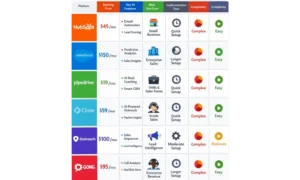
True AI platforms analyze engagement patterns and adjust outreach timing automatically. If prospects from a specific industry tend to open emails on Tuesday mornings, the system learns this and schedules accordingly. Predictive capabilities distinguish AI from simple automation. The platform should forecast deal closure probability, identify at-risk opportunities, and surface patterns in what’s working.
Platform options by business size
For solo founders and very small teams, Close and Pipedrive serve businesses just starting to formalize their sales process. Close focuses on outbound sales with built-in calling and email sequences. Pricing starts around $49 per user monthly. Pipedrive emphasizes visual pipeline management with straightforward deal tracking. Plans begin at $14 per user monthly for basics, with AI features starting at $49.
HubSpot Sales Hub and Salesforce Sales Cloud dominate the mid-market. HubSpot combines CRM, marketing automation, and sales tools in one ecosystem. The AI features include lead scoring, email automation, meeting scheduling, and conversation intelligence. Free tier exists for basic CRM, but real automation starts at $90 monthly.
Salesforce offers more customization and scales further but requires more setup expertise. Einstein AI provides forecasting, opportunity scoring, and automated data entry. Pricing starts around $165 per user monthly for AI capabilities.
For teams needing advanced AI capabilities, Gong and Chorus focus specifically on conversation intelligence. They record and analyze sales calls to extract insights about what messaging works. These platforms justify their cost when you’re running a team of five or more reps and conversation quality directly impacts deal outcomes.
Outreach and SalesLoft specialize in sales engagement, orchestrating multi-channel campaigns across email, phone, social media, and other touchpoints. Pricing starts around $100 per user monthly.
Features that actually matter
Every platform claims to have AI, but specific capabilities determine whether you’ll see real value. Automated lead enrichment pulls data from public sources to build complete prospect profiles without manual research. When a new lead enters your system, the platform should automatically append firmographic data, technographic information, and contact details for other stakeholders.
Sequence intelligence goes beyond basic email automation. The AI should analyze which message variants get responses, optimal send times for different segments, and when to pause sequences based on engagement signals.
Meeting scheduling with AI coordination handles back-and-forth calendar coordination automatically. Advanced versions can even qualify prospects during the scheduling conversation. Revenue forecasting uses historical patterns to predict pipeline outcomes with surprising accuracy.
How to automate sales outreach with AI email and follow-up sequences
Sales outreach automation separates consistent revenue growth from the feast-or-famine cycle most entrepreneurs experience. Manual outreach doesn’t scale because there’s only so many personalized emails one person can write daily before quality drops off.
The math problem with manual sales outreach becomes obvious once you do the calculation. A well-crafted personalized email takes 10 to 15 minutes when you research the prospect and write something that doesn’t sound templated. That means you can send maybe 20 to 25 quality emails in a four-hour prospecting block.
If you’re getting a 15 percent response rate, those 25 emails generate three to four conversations. You’re spending 20 to 25 hours weekly on outreach to book maybe four or five meetings.
AI solves the personalization-at-scale problem
AI outreach platforms analyze prospect data to generate personalized messages that reference specific, relevant details about each recipient. The technology pulls information from LinkedIn profiles, company websites, recent news mentions, and other public sources to find hooks for your outreach.
Instead of writing “I noticed your company is growing” to everyone, the AI might reference a prospect’s recent LinkedIn post, a press release about their funding round, or a job opening that indicates expansion. These specific references dramatically improve response rates because they prove you did actual research.
Advanced AI writes entire message variations based on different prospect attributes. Someone in healthcare gets messaging focused on compliance and security. A prospect in e-commerce sees examples relevant to online retail challenges. The tone and length adjust based on seniority level and industry norms.
Building sequences that convert
Effective outreach sequences require multiple touchpoints across different channels over a defined period. Single emails rarely work anymore because busy prospects miss messages or forget to respond even when interested.
Your first message needs to accomplish three things in under 100 words: explain who you are, why you’re reaching out to them specifically, and what you want them to do. Skip the company history and feature lists. Lead with a specific problem you’ve seen similar companies facing.
Follow-ups can’t just say “bumping this to the top of your inbox.” Each message needs to provide new value or a different angle. Your second email might share a relevant case study. The third could ask a provocative question about their current approach.
Timing matters more than most people realize. Don’t send all your follow-ups at the same time of day. Different prospects check email at different times, and varying your send schedule increases the chance of catching them when they’re receptive.
Basic automation sends messages on fixed schedules regardless of what prospects do. AI-powered sequences adapt based on engagement signals. Website visit triggers change everything. When a prospect visits your pricing page after receiving your email, they’ve moved into active evaluation mode. The sequence should recognize this immediately and accelerate follow-up timing.
Using AI sales assistants to qualify and convert leads 24/7
Sales assistants powered by AI handle the initial conversations that most reps find tedious but absolutely critical for pipeline health. These digital assistants engage prospects through chat, voice, or email to answer basic questions, gather qualifying information, and schedule meetings with your human team.
Research consistently shows that the odds of qualifying a lead drop by over 80 percent if you wait longer than five minutes to respond. Yet most sales teams take hours or even days to follow up with new inquiries because reps are in meetings, handling other prospects, or offline entirely.
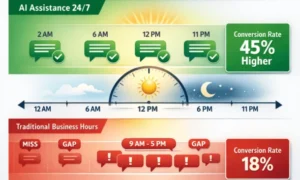
AI sales assistants eliminate wait time completely. A prospect submits a contact form at 11pm on Saturday, and the assistant engages them immediately with relevant questions and information. By the time your human team arrives Monday morning, the assistant has already qualified the lead, answered their initial questions, and either scheduled a meeting or determined they’re not a fit.
What AI assistants handle
Initial engagement responds to inbound inquiries with contextually relevant information based on how the prospect found you and what page they were viewing. Qualification conversations gather the information your sales team needs to determine fit and priority through natural conversation rather than feeling like an interrogation.
Meeting scheduling coordinates calendars to find mutually available times and sends confirmations with all necessary details. Advanced assistants can even reschedule when conflicts arise. This alone saves 20 to 30 minutes per booked meeting.
Different AI assistant modalities work better for different sales contexts. Chat assistants embedded on your website capture visitors while they’re actively browsing. Voice assistants handle phone inquiries and can even make outbound calls. Email assistants manage inbox conversations, responding to inquiries that come through email channels.
Training for your brand voice
Training your assistant to sound like your brand makes the difference between generic interactions that feel robotic and helpful conversations that build trust. Document your brand voice guidelines. Are you formal and consultative, or casual and friendly?
Feed the assistant examples of great conversations from your top sales reps. Let it analyze the language patterns and question styles that work for your business. Define explicit boundaries for what the assistant should and shouldn’t handle. Complex pricing discussions should route to humans.
The transition from AI assistant to human rep is where many implementations break down. Seamless handoffs require the assistant to summarize qualification information and conversation history. When a meeting gets scheduled, the rep should receive a briefing with the prospect’s key challenges, budget expectations, and timeline.
Sales automation metrics: how to track pipeline growth and ROI
Implementing sales automation without measuring its impact is how entrepreneurs waste money on tools that look impressive but don’t move revenue numbers. You need specific metrics that connect automation activities directly to pipeline growth and closed deals.
Sales automation platforms love showing impressive activity numbers displaying thousands of emails sent and hundreds of calls logged. These numbers feel like progress but they might not correlate with the only number that actually matters: revenue.
Pipeline velocity and conversion rates
Pipeline velocity measures how quickly deals move from initial contact through closed won status. This metric captures multiple factors that automation should improve: time to first response, lead qualification speed, meeting booking rates, and sales cycle length.
Time to first contact should drop dramatically with automation. Manual processes might mean leads wait hours or days. Automated systems respond in seconds. Lead qualification time measures how long it takes to determine whether a prospect fits your ideal customer profile. Manual qualification might take a week. AI qualification should compress this to 24 to 48 hours.
Pipeline conversion rates show what percentage of prospects move from one stage to the next. Lead to qualified opportunity conversion reveals how well your automation identifies genuine prospects. Before automation, this might be 15 to 20 percent. After implementing AI qualification, this should improve to 25 to 35 percent because you’re filtering out poor fits earlier.
Qualified opportunity to meeting booked shows whether your outreach and scheduling automation actually gets prospects to commit time. Manual scheduling often sees 40 to 50 percent conversion. Automated scheduling should push this to 60 to 70 percent.
Cost per acquisition and revenue per rep
Cost per acquisition measures how much you spend to acquire each new customer through your automated sales process. Calculate your pre-automation CAC by adding all sales and marketing costs for a period and dividing by customers acquired.
After implementing automation, track whether this number decreases. Automation reduces CAC through lower labor costs per deal, improved conversion rates that reduce waste, and faster sales cycles that let you process more deals with the same resources.
Revenue per rep measures total productivity of your sales team. Automation should increase this metric significantly by removing low-value work. Calculate baseline by dividing total sales revenue by number of reps. After implementing automation, this should increase even if you don’t add headcount.
Build a dashboard that shows your key metrics in one view updated weekly or monthly. Include trend lines, not just point-in-time numbers. Set target benchmarks for each metric based on your business model and goals. Review metrics with your entire team so everyone understands how automation is performing.
Sales automation represents one of the highest-ROI investments available to entrepreneurs in 2026. Success requires starting with realistic expectations about what AI can handle, implementing systematically by automating one high-impact process at a time, and measuring results that connect to revenue. The businesses that win will be those that strategically blend automated efficiency with human relationship-building to create sales experiences that convert prospects faster while operating sustainably at scale.
About the Author

Mateo
I’m Mateo, a SaaS blogger and digital strategist dedicated to helping startups accelerate growth through automation, data-driven decision-making, and performance-focused marketing systems. Over the past few years, I’ve worked with early-stage software companies to refine their go-to-market strategies, optimize conversion funnels, and implement scalable automation frameworks that drive measurable revenue growth. On my blog, I share proven insights from real-world SaaS cases, including actionable frameworks for churn reduction, onboarding optimization, and lead-to-customer conversion. My mission is simple: to empower founders and marketers with practical strategies that turn innovative software into sustainable, profitable success.
Did you find this helpful?
Your feedback helps us curate better content for the community.