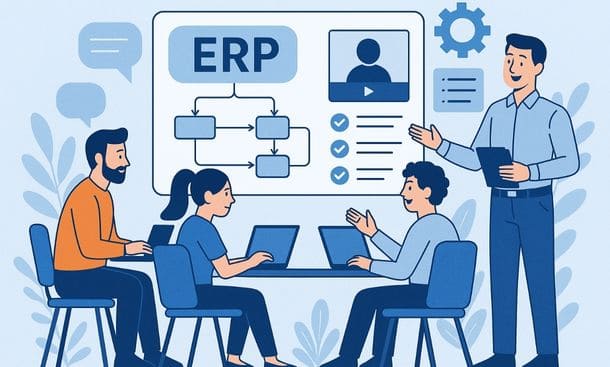
Most ERP projects fail for the same reason. People never feel comfortable using the system. They fall back to spreadsheets. They avoid new processes. They make late updates because they do not trust their ability to do things right. After spending years around SaaS tools I can say that training shapes the future of any platform. When teams learn with confidence everything else becomes easier. Data becomes cleaner. Workflows become stable. The ERP begins to support growth instead of blocking it.
Build a training plan that respects how people learn
Training should not overwhelm users. A good plan moves in small steps. Teach the basics then allow people to practice before adding new layers. Many companies try to cover the entire system in one long session. People forget almost everything. Real learning happens through repetition. Short lessons give the mind enough space to absorb new ideas.
It also helps to group training sessions by role. Finance teams learn differently than operations teams. Sales people need a simple and fast workflow. Inventory teams focus on accuracy. When training aligns with daily tasks people understand the purpose immediately. They see how the new system reduces their effort. Clear goals make learning more natural. This approach connects well with the advice found in the complete ERP guide which encourages teams to focus training on real value rather than technical features.
Use real company scenarios not generic examples
The biggest mistake is using sample data that has nothing to do with the business. Real numbers help employees understand how the system works in their normal routine. Ask them to enter an order from last week. Let them adjust a stock level from a recent shipment. Show them how reports display the same metrics they already watch. Familiar data removes fear. People stop worrying about breaking something because they know the context.
Practical tasks expose gaps faster than theory. If a workflow is confusing the team will sense it. They will ask questions. These questions guide adjustments to the configuration. Real scenarios also build trust. Users see that the system respects their knowledge. It supports their work instead of replacing it.
Create simple learning materials users can follow alone
Teams need resources they can revisit. Short guides help more than long manuals. A quick checklist for entering a purchase order. A one page flow for approving invoices. A short video showing how to generate a monthly report. These materials should be easy to understand. No technical language. No unnecessary details. When resources are simple users consult them without hesitation.
Make these materials accessible in one place. A shared folder works. A small internal wiki works too. The goal is to give every employee the confidence to solve small doubts on their own. When users feel independent they adopt the system faster.
Encourage hands on training from the first week
Training works best when users begin touching the system early. Point and click practice is not enough. People need to type entries. Correct mistakes. Explore screens. Understand how the system reacts. Give them a safe environment for this. A sandbox environment works well because no real data is affected. Users feel free to test without fear.
Hands on sessions reveal hidden habits. Some employees might rely on external spreadsheets. Others may skip steps because they learned workarounds in the past. The new ERP should clean these habits. Early practice helps people adjust before the system goes live. It also shows who needs more support. Every team has different levels of comfort with technology. Training should adapt to that without judgment.
Make training a shared responsibility not an isolated task
The project team should stay close to users during training. They answer questions faster. They notice patterns. They help users understand why certain steps matter. When training is handled by one person the system becomes dependent on that single expert. A team based approach spreads knowledge. People learn from each other. They create a collective understanding of how the ERP fits into daily work.
It also helps to involve a few “champions”. These are employees who learn fast and enjoy testing new tools. They become internal mentors. Others feel safe asking them small questions. Champions reduce pressure on the project team and make training feel more friendly.
Keep sessions short and frequent instead of long marathons
Attention drops after twenty minutes. Long sessions drain energy. Short and frequent lessons keep motivation high. Ten minute sessions create stronger knowledge than two hour workshops. People learn in pieces. Each piece adds stability. This rhythm also respects their workload. Training should never feel like punishment. It should feel like support.
Frequent sessions also help maintain momentum. The system becomes part of the team’s routine. Gradual learning removes anxiety. Each week users feel more confident.
Support users after the go live moment
The first days of live usage create pressure. People worry about making mistakes. They need someone available to help quickly. Offer immediate support during the first two weeks. A small channel where they can ask simple questions works well. Quick answers prevent frustration from building.
After this early period support can shift to a slower rhythm. A weekly session where users share questions. A small review of common errors. This ongoing support keeps adoption strong. Many companies stop training early and then wonder why usage drops. Continued guidance builds long term success.
Create a culture that treats learning as normal
Tools evolve and businesses change. Training should not be a one time event. Make learning part of the company culture. When a new feature is added give a short demo. When workflows shift explain the reason. When performance improves share it with the team.
People embrace the ERP when they see how it supports their success. A culture of learning reduces stress. The system becomes part of the company identity. It grows with the team instead of resisting them.
Strong training builds strong adoption. When people learn through real tasks and receive steady support the ERP becomes a natural part of their work. It also protects data quality and keeps workflows stable. If you want to explore another key angle you can read the satellite article on ERP implementation steps for a smooth transition which explains how to structure the rollout in simple phases.