
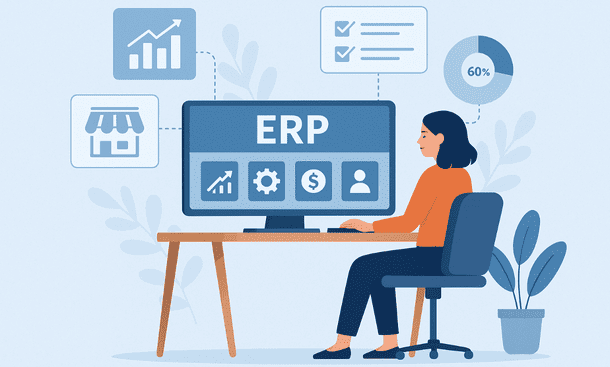
Running a small business today means facing constant pressure to work faster while keeping costs under control. Many entrepreneurs reach a point where spreadsheets feel too slow and manual processes start to break. That is where an ERP system becomes a real advantage. Good ERP software brings structure without making your team feel trapped in a complex tool. As someone who has spent years exploring SaaS platforms and watching small companies grow through smarter systems, I see ERP as one of the strongest levers for clarity and control. Before selecting a tool it helps to understand what features matter most. The full comparison of the best ERP systems for small businesses gives a broader view of the market, but the foundation starts here.
Understanding the role of ERP for small businesses
ERP is often confused with heavy corporate software, yet the modern versions fit small teams much better. The goal is simple. Bring sales, inventory, accounting, operations, and reporting together in one place. When small businesses manage data across several tools the risk of errors rises. Numbers do not match. Stock levels become unclear. Cash flow forecasting turns into guesswork. A solid ERP removes these gaps.
One thing I learned working with entrepreneurs is that clarity gives confidence. When data flows smoothly through a single system decisions feel easier. You understand what is happening today and what is likely to happen next week. The right features support this level of clarity without forcing you to change how your team works overnight.
Below are the features that matter most for small businesses in 2025. Each one brings real value on its own, but together they create a system that scales with your operations.
Centralized data as the foundation
Most problems inside small companies start with scattered data. An ERP should act as a single source of truth. Customer details, supplier information, stock numbers, invoices, and financial records live in one place. This reduces mistakes and makes collaboration easier. Sales teams work with the same information as accounting. Operations teams see the real stock levels. Leaders review numbers without waiting for slow reports.
Centralized data also supports growth. When your business expands into new products or new markets the system keeps everything structured. You do not lose control once your order volume rises. The platform maintains the same clarity even when the business becomes busier.
Inventory and supply chain management
Many small businesses struggle with stock management. Either they hold too much stock or they constantly run out. Both situations drain money. ERP inventory tools help maintain balance. Real time quantities show what is available, what is reserved, and what needs to be ordered. This reduces stress and supports smart purchasing decisions.
Businesses that handle physical products often gain the biggest improvements here. Automatic reorder points save time. Demand tracking prevents stockouts. A clear view of suppliers and lead times helps owners plan ahead. When a business moves faster this type of structure acts as a safety net.
Financial management that supports decision making
Accounting inside an ERP is not only about compliance. It is a tool for daily decisions. When financial data connects with sales, operations, and inventory you see patterns that isolated accounting tools cannot show. Cash flow becomes easier to track. Expenses are clearer. Revenue projections feel more reliable.
Many small companies still use separate tools for accounting and operations. This creates delays and confusion. ERP integrates everything so leaders understand their real financial position at any moment. Even basic tasks like invoicing and expense tracking become simpler.
Sales and customer relationship management
Small businesses grow when they understand their customers. An ERP with built in CRM tools helps track leads, follow sales conversations, and maintain customer history. This can reduce missed opportunities. A salesperson or owner immediately sees the full story behind each customer. Past purchases, unpaid invoices, or pending orders become visible.
For service based businesses this is even more valuable. When projects and client communication connect with financial data you have a deeper view of profitability. Teams can respond faster and maintain a smoother process.
Reporting that brings clarity
One of the most helpful aspects of ERP software is reporting. Small businesses often rely on manual Excel sheets that take hours to prepare. ERP systems generate dashboards with the latest numbers. Owners get a simple overview. Sales trends. Margin insights. Top performing products. Slow moving stock. Upcoming bills.
Good reporting helps owners take a breath and see the business from a wider angle. When information is fresh and trustworthy the next step becomes obvious. You save time and reduce the risk of working with outdated data.
Automation that saves hours
ERP tools reduce repetitive tasks. This matters more than most people expect. Small teams often feel stretched. Automation gives them back time. It can trigger reorder alerts, generate invoices, update stock levels, or send reminders. Small improvements add up over weeks and months. The business becomes more efficient without extra effort.
When teams no longer feel buried under routine tasks they focus on the work that creates value. They support customers better. They improve marketing. They strengthen product quality.
Scalability that protects long term growth
The best ERP systems grow with you. Many small companies start with basic features but later need more tools. Additional modules, integrations, or advanced reporting help your business evolve without jumping to a new system. A scalable ERP gives peace of mind. It allows you to build a strong foundation and expand naturally.
As a fan of SaaS innovation I believe scalability is one of the most important parts of an ERP. You never want to feel locked into a system that limits you after a few years. Modern ERP providers understand this and now design systems that remain flexible across different stages of growth.
Integrations that keep your workflow simple
Small businesses rely on several tools. Email. E commerce platforms. Payment systems. Project management apps. A good ERP connects with these tools so your workflow stays smooth. Integrations reduce double entry and keep your data consistent. When everything works together you spend less time trying to fix errors.
This is one of the reasons ERP systems have become more popular among entrepreneurs. They no longer feel isolated from other tools. Instead they act as the main hub in your digital setup.
Security and reliability
Data security is a growing concern for all businesses. ERP systems provide controlled access based on roles and responsibilities. This protects sensitive information. When data is secure and backed up regularly you reduce the risk of costly errors.
Small businesses cannot afford major disruptions. A reliable ERP keeps operations stable and prevents unexpected downtime. It acts as a safeguard for your numbers, your customers, and your daily workflow.
Adopting an ERP system can feel intimidating for a small business, yet the right features bring a strong sense of clarity and control. When data becomes central and processes align, growth feels easier and decisions become sharper. ERP is not only a tool for large companies. It is a quiet force that supports everyday work and gives entrepreneurs room to breathe.
For a clear picture of how different systems compare you can explore the best ERP systems comparison for 2025 which helps match tools to your needs and your budget.
About the Author

mike
Mike is a tech enthusiast passionate about SaaS innovation and digital growth. He explores emerging technologies and helps businesses scale through smart software solutions.
Did you find this helpful?
Your feedback helps us curate better content for the community.