
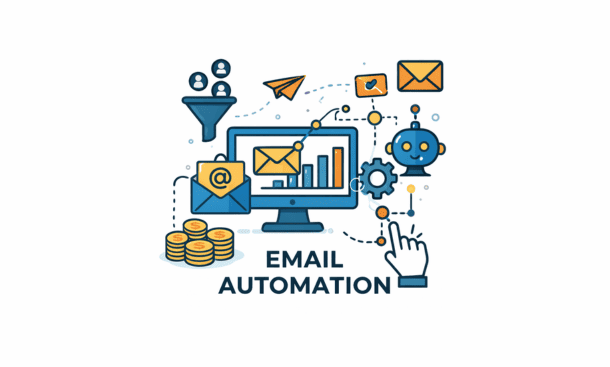
Effective email automation transforms leads into engaged customers without requiring constant manual intervention. It is not simply sending pre-written emails on a schedule—it is about delivering the right message to the right person at the right moment. For businesses that have structured marketing automation for lead acquisition, implementing email workflows completes the loop, ensuring prospects move smoothly through the journey toward conversion. These strategies are a critical part of marketing automation strategies for predictable business growth, providing the framework to turn captured leads into loyal customers.
Email automation integrates behavioral data, segmentation, and lifecycle insights to deliver timely and relevant content. When done correctly, it creates a consistent experience, builds trust, and significantly increases conversion rates. Understanding these strategies provides the foundation for advanced retention programs and long-term customer loyalty.
Why email automation is critical
Manual follow-ups often fail to reach prospects at the moment they are most engaged. Automated emails solve this by:
- Responding instantly to specific actions
- Maintaining a continuous dialogue with leads
- Reducing operational overhead while improving relevance
Timely and personalized messages increase engagement, nurture relationships, and prevent leads from slipping away. Email automation allows businesses to maintain a professional and consistent presence without overloading teams with repetitive tasks.
Key elements of email automation workflows
A robust email automation strategy includes multiple components working together:
1. Segmentation and targeted messaging
Segmentation ensures emails reach the right audience with messages tailored to their behavior, preferences, and stage in the journey. Examples include:
- New leads vs. warm prospects
- Product or service interests
- Engagement with previous campaigns
Segmentation ensures every interaction feels personal and intentional.
2. Trigger-based campaigns
Actions like downloading a guide, visiting a pricing page, or abandoning a cart can automatically trigger targeted emails. Triggered campaigns respond in real time, capturing attention while interest is high.
3. Lifecycle-focused sequences
Mapping emails to lifecycle stages—awareness, consideration, decision, and onboarding—ensures that prospects receive relevant messages at every point. Each sequence serves a purpose, educating, nurturing, and guiding leads toward conversion.
4. Personalization and dynamic content
Personalized subject lines, content blocks, and recommendations make emails more engaging. Dynamic content adapts based on behavior and preferences, enhancing the relevance of automated messages.
5. Consistency in tone and brand voice
Maintaining a consistent voice across sequences reinforces credibility. Automation should preserve human touch, ensuring every email feels intentional and professional.
Integrating with lead acquisition systems
Email automation is most effective when connected to lead generation processes. Insights from acquisition—such as forms completed, page visits, or engagement signals—feed into email workflows, prioritizing high-intent contacts and sending messages that align with their interests.
This integration ensures:
- Immediate response to interested prospects
- Better alignment between marketing and sales
- Increased efficiency and higher conversion rates
Leads captured through automated acquisition systems flow naturally into email nurturing sequences, creating a seamless experience from first touch to sale.
Best practices for high-performing email automation
Start simple
Focus on essential workflows first. Overly complex sequences can reduce clarity and engagement.
Monitor engagement metrics
Track opens, clicks, conversions, and unsubscribes. These metrics indicate effectiveness and highlight areas for improvement.
Use behavior-driven triggers
Respond to actions rather than sending arbitrary emails. Timing based on behavior increases relevance and results.
Align with broader automation strategy
Ensure email workflows connect with other automated processes like lead acquisition and retention. This creates a cohesive system that drives predictable growth.
Continuously optimize
Test subject lines, content, timing, and sequence length. Small adjustments can significantly impact performance.
Email automation strategies allow businesses to nurture leads effectively, ensuring that prospects receive timely, relevant, and personalized messages. By connecting email workflows with lead acquisition systems, companies can guide prospects from initial interest to conversion while maintaining efficiency and consistency. For a broader understanding of the core systems that support these workflows, reviewing Marketing Automation Basics provides insight into the foundational principles that make email automation effective.
About the Author

Mateo
I’m Mateo, a SaaS blogger and digital strategist dedicated to helping startups accelerate growth through automation, data-driven decision-making, and performance-focused marketing systems. Over the past few years, I’ve worked with early-stage software companies to refine their go-to-market strategies, optimize conversion funnels, and implement scalable automation frameworks that drive measurable revenue growth. On my blog, I share proven insights from real-world SaaS cases, including actionable frameworks for churn reduction, onboarding optimization, and lead-to-customer conversion. My mission is simple: to empower founders and marketers with practical strategies that turn innovative software into sustainable, profitable success.
Did you find this helpful?
Your feedback helps us curate better content for the community.