
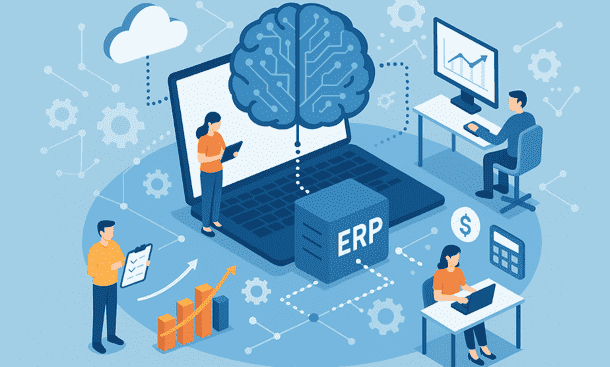
Artificial intelligence has become a real turning point for small companies in the United States. More business owners talk about automation now because daily operations take time and energy. They handle invoices, stock levels, reports, and customer updates. After a while, these tasks limit growth. When I meet founders who want more space to think and build, they often ask if their ERP can support smarter processes. They want a system that works with them, not one that slows everything down.
AI-powered ERP gives that kind of support. It removes repetitive steps, highlights risks, and speeds up routine decisions. Small teams that once relied on manual input now get suggestions, alerts, and ready-made actions. Growth becomes easier because the system anticipates needs instead of waiting for someone to check a spreadsheet. The shift feels less like a software upgrade and more like a change in how the company operates. This path connects naturally to the broader movement described in the ERP trends defining 2025, where automation stands as one of the strongest forces shaping the future of enterprise software.
The rise of automation inside ERP
Most older systems were built to record information, not to guide decisions. A warehouse clerk updated stock. An accountant added invoices. A manager checked reports at the end of the month. Everything depended on people entering data on time. If someone forgot, the entire workflow stalled.
AI changes that dynamic. Instead of waiting for updates, the system analyzes patterns in real time. It sends alerts before stock runs out. It flags unusual transactions. It predicts when demand will rise or fall. It keeps an eye on weak points that a busy team might miss.
Small businesses appreciate this because they usually do not have large departments. Automation fills the gaps. It lets a five-person company act with the precision of a bigger structure. Most teams tell me they never realized how many tasks could be automated until they upgraded their system. Once they see it, they cannot imagine going back.
This evolution mirrors what many analysts expect for the next decade. Automation is becoming a core feature rather than a premium add-on. That shift reflects a deeper transformation explored in the future of enterprise automation inside next-generation ERP.
Everyday tasks automation improves
AI automation is not abstract. It affects daily work in very concrete ways. Some of the most impactful improvements show up in these areas.
Inventory and supply chain
Stock accuracy drives the health of many small businesses. Without automation, reports become outdated within hours. AI solves this by tracking patterns across sales, orders, and seasonality. It predicts reorder points and updates stock levels continuously. It also helps reduce excess inventory by identifying items that move slowly.
Owners who manage physical products often say this is their biggest win. Fewer stockouts, fewer surprises, and fewer late-night emails about missing items.
Finance and accounting
Finance teams spend a lot of time on repetitive tasks. Data entry, invoice matching, and report preparation take hours. AI can automate much of this work. It captures invoice details, pairs them with purchase orders, and flags mismatches.
The system also identifies late payments and suggests payment reminders. Monthly closing becomes faster and smoother. Automation removes many of the manual steps that used to slow down financial operations.
Sales and customer management
Customer-facing teams appreciate AI recommendations. The system analyzes buying history and suggests upsell opportunities. It warns when a customer’s engagement drops. It helps sales reps prioritize leads based on expected conversion.
These insights help small sales teams keep relationships strong without spending hours reviewing data. The results often show up in repeat purchases and better customer retention.
Workforce planning
Scheduling becomes easier with automated planning. The system looks at workload, deadlines, inventory arrivals, and sales peaks. It then suggests staffing needs. This helps managers avoid last-minute changes and keep projects on track.
These improvements align with the wider patterns of intelligent automation discussed in the satellite article on cloud migration and workflow modernization, showing how AI strengthens the long-term value of cloud ERP.
Why small businesses benefit the most
Large companies use AI automation because they deal with high volumes. But small companies often feel the impact even more. A small team cannot afford delays or repeated mistakes. When one person handles multiple roles, automation becomes essential.
Time savings
AI reduces the hours spent on repetitive tasks. Teams can focus on planning, customer service, and growth instead of manual updates. Many owners tell me they gain several hours per week after switching to an automated ERP.
Better decision making
Small companies rely on quick decisions. AI highlights trends before they become problems. This gives leaders a clearer view of their operations. Planning becomes easier and far more accurate.
Lower operational risk
Automation reduces human error. It also protects the business from overlooked issues such as overdue invoices, missing stock, or incorrect pricing. For businesses that operate with tight margins, fewer mistakes mean more stability.
Stronger competitiveness
AI gives small businesses tools that once existed only for large enterprises. This levels the playing field. A local manufacturer, a boutique wholesaler, or a small ecommerce brand can now use predictive insights that help them compete more effectively.
Common barriers when adopting AI-powered ERP
AI brings many advantages, but the transition can be challenging. Understanding these barriers helps companies prepare and avoid frustration.
Team hesitation
Some employees fear automation because they assume it will replace their work. In reality, it reduces repetitive tasks but increases meaningful work. Clear communication helps ease this concern.
Skills gap
AI features require a basic comfort with dashboards and workflows. Training becomes important. Teams need time to explore the system and build confidence.
Over-expectation
Automation works best with good data. If the old system contains inconsistencies, AI cannot deliver accurate predictions. Companies must clean their records before deploying advanced features.
Budget constraints
AI-enhanced ERP costs more than very basic systems. But long-term savings often justify the investment. A realistic budget plan helps avoid surprises.
Practical steps for adopting AI automation
A smooth transition to an AI-powered ERP starts with a few clear actions.
1. Define the most important outcomes
Some teams want better stock control. Others want faster invoicing or real-time reporting. When goals are clear, it becomes easier to choose the right system.
2. Start with one automated workflow
A small business does not need to automate everything on day one. Beginning with one meaningful workflow—like purchase order matching or automated forecasting—helps build confidence.
3. Prepare clean data
Clean data is the foundation of all AI features. A short review of customers, suppliers, and stock entries improves the system’s accuracy.
4. Train the team through simple scenarios
Training works best when it feels connected to daily tasks. Step-by-step examples make concepts easier to understand.
5. Review performance after a few weeks
The first month reveals the most valuable insights. Teams can adjust workflows and refine settings. This regular review helps the system reach its full potential.
AI-powered ERP changes the way small businesses operate. It reduces manual work, strengthens decision making, and brings greater stability to daily operations. Automation supports growth by giving teams more time to focus on the tasks that matter most. When businesses understand the benefits and challenges, they can adopt these tools with confidence and set a strong foundation for the years ahead.
If you want to go one step further, the article on cloud ERP migration benefits and challenges offers practical advice that helps frame the next move in your digital roadmap.
About the Author

mike
Mike is a tech enthusiast passionate about SaaS innovation and digital growth. He explores emerging technologies and helps businesses scale through smart software solutions.
Did you find this helpful?
Your feedback helps us curate better content for the community.