
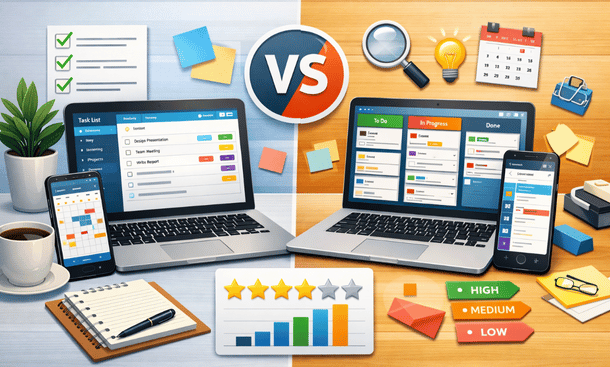
Choosing a task management app can feel like picking a surfboard when the waves keep changing. What works for one founder can slow down another. Entrepreneurs move fast. Tools need to keep up without adding friction.
A best task management app comparison is not about features alone. It is about fit. How well the tool matches your way of thinking and working. For early-stage startups, that fit matters more than advanced complexity.
TickTick often shows up as a quiet favorite. Not because it tries to do everything. Because it does the right things well.
Knowing the pricing details complements the insights from our ultimate TickTick task management guide to optimize workflow planning.
What entrepreneurs should look for first
Before comparing tools, founders need clarity on their own needs.
Speed matters. You should be able to add tasks in seconds.
Flexibility matters. Plans change. Your app should adapt.
Focus matters. Tools should reduce distraction, not create it.
Cost matters. Early-stage startups need value without heavy commitments.
Many popular tools shine in one area but fail in others. That is why comparisons should focus on daily use, not marketing promises.
TickTick vs Todoist
Todoist is clean and widely used. It offers strong task organization and integrations.
TickTick matches those strengths while adding built-in calendar views, focus timers, and habit tracking. These features reduce the need for extra apps.
For solo founders or small teams, TickTick often feels more complete out of the box. It blends work and personal planning smoothly.
Todoist works well for pure task lists. TickTick goes further into daily execution.
TickTick vs Asana
Asana is powerful for teams and complex projects. It shines in structured environments.
For early-stage entrepreneurs, Asana can feel heavy. Setup takes time. Maintenance becomes work.
TickTick stays lighter. It focuses on individual execution while still supporting collaboration when needed.
Founders who value speed and simplicity often prefer TickTick early on, then consider tools like Asana later as teams grow.
TickTick vs Notion
Notion is flexible and customizable. It can become anything you want.
That flexibility comes with a cost. Setup time. Decision fatigue. Maintenance.
TickTick offers structure without customization overload. You start using it immediately.
For founders who want to plan and execute without building systems, TickTick feels more natural.
Notion shines for documentation. TickTick shines for action.
TickTick vs Trello
Trello uses boards and cards. Visual and simple.
It works well for workflows but struggles with daily planning and time-based execution.
TickTick handles dates, priorities, and recurring tasks more effectively. Boards can exist but they are not the core.
Entrepreneurs focused on personal productivity often outgrow Trello quickly.
Cost and value comparison
Pricing influences decisions. Founders need tools that grow with them.
TickTick pricing is affordable. The free version is generous. Premium adds real value.
Other tools often lock important features behind higher tiers.
For startups watching expenses, TickTick offers strong return on investment.
Which app fits which founder
No tool fits everyone. The best task management app depends on how you work.
If you lead a growing team with complex dependencies, Asana may fit.
If you love building systems, Notion may excite you.
If you want clean task lists, Todoist works well.
If you want an all-in-one daily execution system, TickTick stands out.
This clarity helps founders choose with confidence instead of chasing trends.
Why simplicity wins early
Early-stage startups do not need complexity. They need momentum.
Tools that are easy to use get used. Tools that feel heavy get ignored.
TickTick respects that reality. It stays simple while offering depth when needed.
That balance is rare and valuable.
A best task management app comparison should focus on daily reality, not feature lists. Entrepreneurs need tools that support execution, focus, and flexibility.
TickTick fits founders who want to move fast without losing control. It adapts as startups grow without forcing change too early.
To understand whether it fits your budget and growth stage, exploring TickTick pricing and plans for growing startups helps complete the picture.
About the Author

Pamela
Pamela is a dynamic professional with a deep passion for SaaS and emerging technologies. She provides valuable insights into software trends, digital innovation, and cutting-edge tools that empower businesses to thrive and expand.
Did you find this helpful?
Your feedback helps us curate better content for the community.