
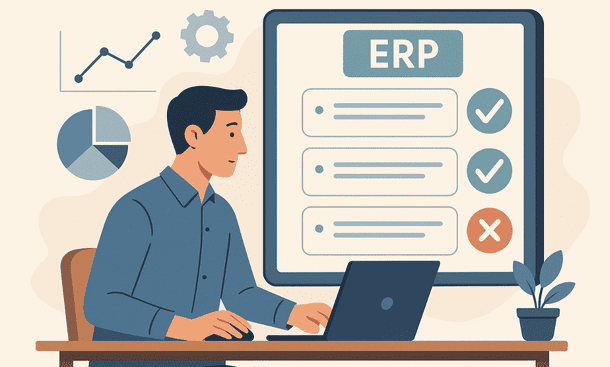
Choosing an ERP system is one of the most strategic decisions a small business can make. The software touches finance, inventory, sales, projects, and reporting, so selecting the right solution impacts daily operations and long-term growth. Entrepreneurs often feel overwhelmed by the number of options, each claiming to be the best for small businesses. The key is not chasing every feature but understanding how a system fits your business’s processes, team size, and future plans. My experience with SaaS tools shows that a structured approach avoids costly mistakes and frustration.
Many small business owners start by looking at comparison lists, but those lists rarely reflect the unique workflows and priorities of each company. Deciding which ERP fits requires evaluating current needs, potential growth, and operational complexity. Focusing on usability, flexibility, and support ensures the system delivers value from day one.
Define your business needs and objectives
The first step is clarity on what problems the ERP should solve. Are you looking to centralize accounting, streamline inventory, improve reporting, or integrate multiple tools? Each objective guides the selection process. Prioritizing goals prevents feature overload and keeps costs manageable. A clear picture of what you want to achieve also helps measure the system’s success after implementation. Without defined objectives, businesses often adopt systems that are too complex or insufficient for their workflows.
Evaluate functionality vs complexity
Every ERP offers core functions like finance, sales, and reporting. What sets systems apart is additional functionality and how it matches business processes. Small businesses benefit from solutions that cover essential operations without adding unnecessary complexity. Extra modules or custom workflows can be powerful, but they often increase costs and training time. Consider whether the features truly align with your daily operations and growth plans. A simpler system used effectively is more valuable than a complex one barely adopted by the team.
Consider scalability and flexibility
Your business will grow, and your ERP should grow with it. Evaluate whether the system can handle more users, locations, and transactions. Cloud-based systems often provide easy scalability, while on-premise solutions require planning for server capacity and support. Flexibility matters as well. Can the ERP adapt to new processes, additional modules, or integrations with other tools? Systems that lock you into rigid workflows can hinder growth and lead to costly migration later.
Assess ease of use and adoption
A system’s interface and user experience significantly impact adoption. Teams will use an ERP only if it feels intuitive. Look for platforms with clean navigation, role-based dashboards, and accessible reporting tools. Training is easier when the system matches the team’s habits and mental models. Involving key users early in demos or trials can reveal whether the interface supports their daily tasks. Ease of use directly affects productivity, accuracy, and staff satisfaction.
Evaluate vendor support and reputation
Even the best software requires guidance at setup and during ongoing use. Vendor support is critical for small businesses that lack in-house IT expertise. Evaluate available resources: training materials, customer service responsiveness, implementation assistance, and community forums. A vendor experienced with small business requirements and your specific sector provides a smoother path to success. Reputation matters as well. Case studies, testimonials, and reviews indicate whether the vendor delivers consistent quality and support.
Analyze total cost of ownership
Beyond monthly or annual subscription fees, consider hidden costs. Implementation, data migration, training, integrations, and ongoing maintenance all affect the total investment. Some vendors include onboarding in the subscription, while others charge separately. Align pricing with business priorities and budget constraints. An ERP that reduces manual work, minimizes errors, and supports growth often justifies a higher upfront cost when viewed as a long-term investment.
Pilot and gather feedback
If possible, run a pilot with a small team or a subset of modules. Test how the system handles real workflows, transactions, and reporting. Gather feedback from users to identify pain points, missing features, or usability issues. This insight helps refine the final selection and ensures the team is prepared for full adoption. Piloting reduces risk and prevents surprises after full deployment.
Make a balanced decision
Choosing an ERP is not about finding the system with the most features. It’s about aligning the platform with your business processes, team needs, and growth plans. Balance functionality, usability, support, and cost to find a solution that works for today while leaving room for tomorrow. Entrepreneurs who take a structured approach save time, reduce errors, and build a system that delivers lasting value.
Selecting the right ERP system sets the foundation for smoother operations, better decision making, and sustainable growth. Small businesses benefit from careful planning, understanding their needs, and evaluating vendors beyond marketing claims. A system that fits the team and workflow makes adoption faster and more effective.
For guidance on sector-specific considerations and choosing features tailored to your industry, the article on Industry-Specific ERP Solutions for Small Business Growth provides practical insights to match ERP functionality with real operational needs.
About the Author

mike
Mike is a tech enthusiast passionate about SaaS innovation and digital growth. He explores emerging technologies and helps businesses scale through smart software solutions.
Did you find this helpful?
Your feedback helps us curate better content for the community.