
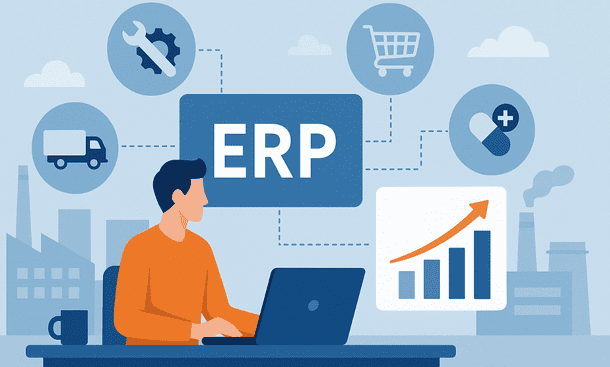
Small businesses operate in diverse sectors, each with its own workflows, challenges, and customer expectations. A one-size-fits-all ERP system rarely meets every need. Retailers, manufacturers, service providers, and distributors all require specialized functionality to keep operations smooth and decisions clear. Understanding the options for industry-specific ERP can save time, reduce errors, and provide a better foundation for growth. Entrepreneurs who want a broader overview often refer to the complete 2025 comparison of the best ERP systems for small businesses, but selecting the right industry-focused platform starts with knowing what matters most in your sector.
Why industry-specific ERP matters
Generic ERP systems handle core functions like accounting, inventory, and reporting. They are often adequate for basic operations, but they fall short when workflows become complex or unique to a particular industry. For instance, a manufacturer needs production planning, quality control, and supply chain tracking. A retailer needs POS integration, inventory replenishment, and multi-channel sales management. Service-based businesses require project tracking, time billing, and client management. Using a generic ERP forces workarounds that slow the team and increase errors.
Industry-specific ERP systems are designed to match these workflows. They anticipate the types of data each business must track, provide relevant reports, and offer automation tailored to sector-specific tasks. This alignment ensures teams spend less time adapting the system and more time optimizing processes that directly impact revenue.
Retail and e-commerce
Retail businesses face constant pressure to maintain inventory accuracy, manage promotions, and deliver a seamless customer experience. Industry-specific ERP for retail combines point-of-sale, stock management, purchasing, and sales reporting in one system. Multi-location tracking and real-time inventory visibility prevent stockouts or overstocking. Integration with e-commerce platforms ensures online and offline channels work together without creating separate datasets.
Small retailers benefit from ERP solutions that automate reordering based on sales trends, track customer loyalty programs, and simplify reporting for tax and performance analysis. A focused ERP allows owners to see which products sell best, understand seasonal demand, and plan for expansion without overcomplicating daily operations.
Manufacturing and production
Manufacturers require ERP systems that support production planning, bills of materials, scheduling, and quality management. Tracking raw materials, work-in-progress, and finished goods is critical to minimize waste and maintain efficiency. Many industry-specific ERP solutions for manufacturers include automated workflows that monitor machine usage, track production cycles, and alert teams when issues arise.
For small manufacturers, choosing a system that provides both shop floor visibility and executive reporting is essential. They gain insights into costs, productivity, and lead times. This allows better pricing, improved delivery performance, and more informed decisions for future expansion. Manufacturing ERP often includes modules to manage vendors, compliance, and maintenance schedules, all critical for consistent operations.
Services and project-based businesses
Service businesses, such as agencies, consultancies, and contractors, rely on accurate project tracking and billing. Industry-specific ERP for services includes time tracking, resource allocation, and client management. Teams can monitor project budgets, schedule staff efficiently, and generate invoices automatically. Reporting focuses on project profitability, employee utilization, and client satisfaction.
Small service-based companies benefit when the ERP aligns with the way they deliver services. Rather than forcing all operations into generic templates, these systems handle multi-project workflows, recurring services, and client-specific pricing. This reduces errors, improves client experience, and helps businesses scale without adding unnecessary administrative overhead.
Wholesale and distribution
Distribution companies handle large volumes of products across multiple warehouses and delivery routes. Industry-specific ERP solutions for distribution focus on inventory accuracy, order management, and logistics. Automated demand planning and stock allocation minimize shipping delays. Integration with carriers and marketplaces keeps operations connected across channels.
For small distributors, an ERP tailored to the sector can reduce stock discrepancies, accelerate order processing, and support rapid growth. Visibility into inventory and order status improves customer service and enables smarter purchasing decisions. The right system can also manage returns, batch tracking, and expiry dates, which are often critical in food or chemical distribution.
Key features to look for in any industry-specific ERP
Across industries, certain features make ERP adoption smoother and more effective. Flexible reporting that aligns with sector needs, dashboards that highlight critical metrics, and automation of repetitive tasks remain important. Multi-user access with role-based permissions ensures each team member sees only relevant data. Integration with existing tools, such as CRM, e-commerce platforms, or accounting software, prevents silos and preserves workflow efficiency. Scalability is also crucial. The system should support growth in users, locations, and transactions without forcing a switch to a new platform.
Another practical aspect is vendor support. Industry-specific knowledge from the provider can simplify implementation and training. Small businesses often do not have dedicated IT teams, so guidance tailored to sector workflows reduces mistakes and accelerates adoption.
Choosing the right solution
Selecting an industry-specific ERP starts with understanding core operations and pain points. Identify critical workflows, bottlenecks, and reporting needs. Evaluate which ERP solutions cover these areas without unnecessary complexity. Cost is a factor, but it should be weighed against time saved, error reduction, and potential growth. Many vendors offer trial versions or demos, which allow teams to see the system in action before committing.
Entrepreneurs can also look at the broader landscape of ERP solutions to ensure they select the right balance between functionality and usability. Consulting the complete 2025 comparison of the best ERP systems for small businesses helps verify whether the chosen industry-specific solution aligns with overall strategic goals and long-term growth plans.
Industry-specific ERP systems help small businesses operate with efficiency, clarity, and confidence. Retailers, manufacturers, service providers, and distributors all benefit when software matches their workflows instead of forcing them into generic templates. The result is reduced errors, faster processes, and better decision making. Understanding your sector’s needs and selecting the right solution sets a strong foundation for growth.
For businesses looking to understand costs associated with these tailored systems, the guide on ERP cost for small business provides practical insights into pricing, implementation, and hidden fees to plan a smart investment.
About the Author

mike
Mike is a tech enthusiast passionate about SaaS innovation and digital growth. He explores emerging technologies and helps businesses scale through smart software solutions.
Did you find this helpful?
Your feedback helps us curate better content for the community.