
The Kanban method offers a visual, intuitive way to manage tasks and optimize team workflow. It is particularly useful for startups where priorities shift rapidly and clarity is essential. By tracking work visually and limiting active tasks, teams can focus on delivery without feeling overwhelmed. To understand how Kanban fits among other project strategies, the complete guide to project management methodologies provides a helpful overview.
How Kanban works
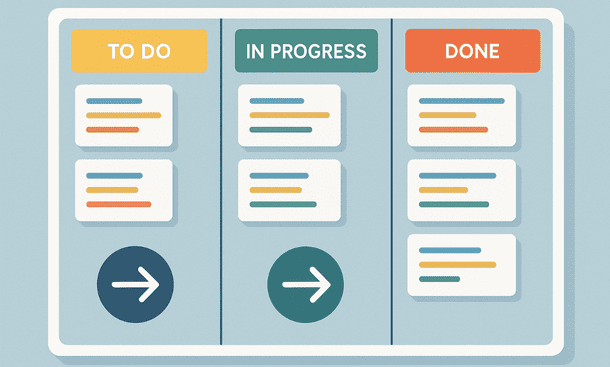
Kanban organizes work as a series of tasks moving through stages, often represented as columns on a board. Typical stages include To Do, In Progress, and Done. Each task is a card that moves across the board as it progresses. This simple visualization makes it easy for everyone to see the current workload and identify bottlenecks.
One key feature is limiting work in progress (WIP). By restricting the number of active tasks, teams avoid overload, reduce stress, and maintain consistent flow. This ensures that tasks are completed efficiently before new work is started.
Kanban is flexible. Teams can add columns or swimlanes to represent different workflows, priorities, or project types. It adapts to the size of the team and the complexity of projects, making it a versatile tool for startups.
Benefits for startups
Kanban offers several advantages for early-stage teams. First, it increases transparency. With tasks visible to the entire team, everyone understands what is happening and who is responsible. This reduces misunderstandings and improves coordination.
Second, Kanban improves efficiency. WIP limits prevent bottlenecks and help the team focus on completing tasks rather than juggling too many at once. This consistent flow leads to faster delivery and better predictability.
Third, Kanban supports continuous improvement. Teams can track cycle times, identify recurring obstacles, and refine processes incrementally. These small adjustments enhance productivity over time without disrupting the workflow.
Finally, Kanban is simple to adopt. It does not require extensive training or complex ceremonies. A basic board and clear rules are often enough to start managing tasks more effectively.
Implementing Kanban in your team
Starting with Kanban begins with visualizing work. Create a board that represents the stages of your workflow. List tasks as cards and move them across the board as progress is made. Start small and expand as the team gains familiarity.
Next, set WIP limits. Determine how many tasks can be in each stage at a time. This encourages focus and ensures tasks are completed before new ones are taken on. Adjust the limits as the team learns and workflow becomes smoother.
Regular reviews are also important. Hold brief check-ins to discuss blockers, progress, and possible improvements. These meetings keep everyone aligned and help maintain momentum without creating excessive overhead.
Tracking metrics such as cycle time or throughput can also support continuous improvement. By analyzing these numbers, founders can identify patterns and optimize processes for better efficiency.
Common pitfalls and solutions
A common challenge is ignoring WIP limits. Without limits, the board becomes cluttered and the team may multitask excessively. Enforcing limits is essential for Kanban to deliver value.
Another challenge is poor visualization. If tasks are unclear or the board is not updated regularly, transparency is lost. Teams should keep the board accurate and simple, avoiding unnecessary complexity.
Some teams also resist change. Moving from informal task management to a structured Kanban board requires consistency. Clear communication about benefits and incremental adoption helps overcome resistance.
Finally, Kanban alone does not solve prioritization. Founders must still decide which tasks are most important. The board shows progress but does not replace strategic decision-making.
Kanban and other project management methods
Kanban can complement Agile, Lean, or even Waterfall workflows. In Agile, Kanban boards visualize sprint tasks. In Lean, boards help track value delivery and reduce waste. Even Waterfall projects can benefit by using Kanban to monitor task progress during structured stages.
This adaptability makes Kanban an excellent tool for startups seeking a visual, actionable way to manage work while staying flexible and responsive.
The Kanban method provides clarity, focus, and continuous improvement through visual workflow management. Startups can use it to optimize delivery, reduce bottlenecks, and keep teams aligned. For founders looking to maximize efficiency while minimizing waste, exploring Lean Project Management offers complementary strategies to refine processes and prioritize value.
About the Author

Pamela
Pamela is a dynamic professional with a deep passion for SaaS and emerging technologies. She provides valuable insights into software trends, digital innovation, and cutting-edge tools that empower businesses to thrive and expand.
Did you find this helpful?
Your feedback helps us curate better content for the community.