
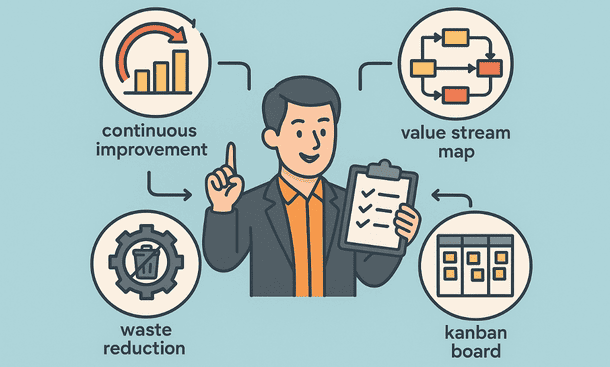
Lean project management focuses on maximizing value while minimizing waste. It is particularly suited for startups that need to deliver results quickly with limited resources. By emphasizing efficiency and continuous improvement, Lean helps teams focus on what truly matters. For a broader understanding of how Lean fits among other methodologies, the complete guide to project management methodologies offers useful insights.
The core principles of Lean
At its heart, Lean encourages teams to eliminate activities that do not add value. Every task, meeting, or report should contribute to progress. For startups, this focus prevents energy from being spent on unnecessary work, helping founders and teams move faster.
Lean also promotes continuous improvement. Teams are encouraged to review processes regularly and make incremental adjustments. This iterative mindset allows small startups to evolve their workflows without major disruptions or rigid structures.
Another key principle is customer focus. Every action is aligned with delivering value to users or clients. This ensures that development, design, and marketing efforts are purposeful, reducing wasted effort on features or products that do not meet real needs.
Benefits for startups
Lean project management offers several advantages for early-stage companies. First, it improves efficiency. By removing non-essential tasks and prioritizing high-value work, teams can achieve more with fewer resources. This is crucial for startups where time and budget are limited.
Second, Lean encourages agility. Continuous feedback loops allow teams to detect problems early and adapt quickly. While not as structured as Agile, Lean shares the emphasis on learning fast and iterating based on real-world results.
Third, Lean strengthens team focus. Clear priorities help members understand what matters most, reducing confusion and improving productivity. This clarity is especially valuable for founders who must manage multiple responsibilities simultaneously.
Implementing Lean step by step
Adopting Lean starts with identifying value streams. Founders should map the key steps that deliver value to customers and remove activities that do not contribute. This can include unnecessary meetings, duplicate reporting, or processes that slow down delivery.
Next, visualize workflow. Using simple boards or lists, teams can track tasks from start to finish. This visibility helps detect bottlenecks and ensures resources are allocated effectively.
Another step is to introduce small, regular reviews. Teams should reflect on what worked, what did not, and what can improve. These reviews are concise and actionable, helping maintain momentum without overburdening the team.
Finally, Lean emphasizes rapid iteration. Products or features should be released quickly in simple versions to gather feedback. This allows the team to adapt based on real user needs instead of assumptions.
Common challenges and solutions
One common challenge is over-focusing on efficiency and neglecting quality. Lean does not mean cutting corners; it means prioritizing value. Founders should ensure that reducing waste does not compromise the product or user experience.
Another challenge is resistance to change. Teams accustomed to traditional processes may find Lean unfamiliar. Clear communication about goals, benefits, and incremental steps helps foster adoption and engagement.
Finally, tracking progress can be tricky without proper visibility. Using visual boards or lightweight project management tools ensures that everyone understands priorities, progress, and responsibilities.
Lean in combination with other methods
Lean works well alongside Agile or hybrid approaches. While Lean focuses on efficiency and value, Agile provides iterative cycles for development. Combining both allows startups to deliver quickly while maintaining flexibility.
Some teams use Lean principles to refine processes within Waterfall projects. This ensures that even structured, sequential work avoids waste and focuses on outcomes. By applying Lean thinking across methodologies, startups can optimize both planning and execution.
Lean project management helps startups achieve more with less by focusing on value, efficiency, and continuous improvement. Its principles encourage founders and teams to streamline workflows and adapt quickly to change. For teams interested in visual approaches that complement Lean, exploring the Kanban Method can provide practical tools to manage tasks and optimize flow.
About the Author

Pamela
Pamela is a dynamic professional with a deep passion for SaaS and emerging technologies. She provides valuable insights into software trends, digital innovation, and cutting-edge tools that empower businesses to thrive and expand.
Did you find this helpful?
Your feedback helps us curate better content for the community.