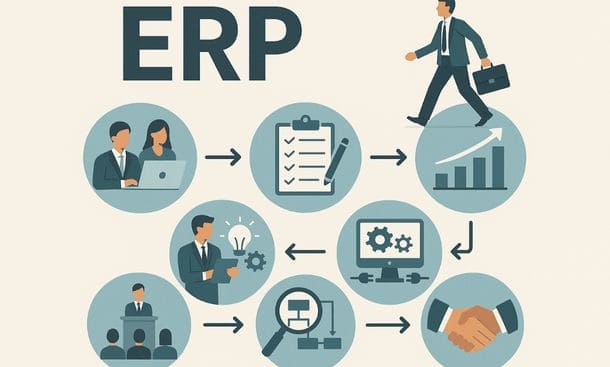
Moving to an ERP system is often the moment when a small business decides to operate with more intention. Processes become visible. Teams understand how their work connects. Data stops living in scattered files and starts serving a purpose. I have watched this shift dozens of times and it often marks the start of real growth. Choosing the right platform matters but the way the rollout unfolds matters even more. A calm and structured approach protects your timeline and helps your team avoid stress.
Define goals that support real business needs
Any ERP project should start with clarity. Tools do not solve confusion. When leaders rush into setup without listing their goals they often end up with a system that feels heavy. Good goals are concrete. Track inventory without spreadsheets. Reduce order errors. Follow project costs. Strengthen reporting. Simple ideas make strong foundations. Teams feel safer when they understand why the company is making a change. Clear goals also help vendors give better support because they understand what success looks like.
One question I like to ask founders is direct. What breaks most often in your current workflow. The answers reveal where to focus first. ERP adoption works best when it solves an existing burden. It does not need to transform everything in one week. It should reduce friction step by step. This approach aligns well with the recommendations from the comprehensive guide to ERP systems which explains how business value grows when the rollout follows a stable roadmap.
Build a project team with real ownership

A good ERP implementation is never owned by one person. It needs a small internal team that understands processes and has the authority to make decisions. Usually this includes someone from operations finance and the technical side. When ownership is shared the project moves faster. Questions get answered. Blocks get removed. People feel more involved. It also prevents the common situation where one employee becomes the only expert and the system collapses when they are absent.
Strong ownership also means setting expectations. The team should know that the early weeks require more attention. They should also have enough time to learn the new system without feeling punished for it. Workloads need to be adjusted so the team can make thoughtful choices. When companies skip this step they often face burnout or resentment which slows everything down later.
Map existing workflows before touching the system
Implementation becomes easier when you understand every current step. Many businesses skip this because it feels boring. Yet it is one of the highest return activities. You discover tasks that no one needs. You remove small errors that cost money. You also spot opportunities to automate simple actions. Mapping workflows can be as simple as writing each step on a whiteboard. Sales receives the order. Inventory checks stock. Finance approves. Shipping prepares. Recording these flows helps you customize the ERP with accuracy.
This step often reveals invisible habits. People might be using personal spreadsheets to track things. Teams might have different versions of the same data. These inconsistencies need to be fixed before migration. Clean data moves faster and reduces the risk of system conflicts. Your future reporting becomes more reliable too.
Configure the system in small controlled phases

Once goals and workflows are clear the configuration stage becomes more straightforward. The idea is not to replicate every old habit. It is to build a workflow that saves time. Start with core modules. Inventory. Finance. Orders. Projects. Let these parts stabilize before adding advanced automation. This reduces pressure on your team. If something needs adjustment you can fix it fast since the environment is still simple.
Small phases also help people learn with confidence. Users see progress. They start trusting the system. They also feel comfortable sharing feedback. Good configuration reflects the reality of your business. Not a perfect textbook model. That is why constant communication between your project team and the vendor makes a big difference.
Train your team with real scenarios
Training only works when people practice on real examples. Avoid long theoretical sessions. Give practical tasks based on daily work. Enter an order. Approve a purchase. Adjust a stock level. Generate a simple report. Each task helps a user learn how the system behaves. It also highlights areas where additional support is needed. People learn faster when they are not judged. Encourage mistakes early because this is how confidence develops.
Training should not end at launch. After two weeks teams usually face new questions. Offering short refresh sessions during the first month keeps adoption smooth. When employees feel supported they stop clinging to old tools. This is when productivity begins to rise.
Track early performance and adjust
The first weeks after launch are important. Data begins to flow. Reports reveal patterns. Errors show up and need fixing. This period is not a setback. It is a normal part of adoption. The goal is to monitor how the new system supports the business. Does order processing take less time. Are inventory discrepancies lower. Is financial visibility clearer. These small signals show that the system is starting to deliver value.
When something feels slow or confusing the solution is rarely a full redesign. Small configuration adjustments often repair the issue. The project team should meet weekly during the early phase. They review feedback and make simple improvements. This keeps momentum alive and prevents frustration from building.
Build habits that keep the system healthy

An ERP system is not a one time project. It is a long term structure. Healthy habits protect it. Keep data clean. Review user roles. Archive old records. Update workflows when the business evolves. Many companies forget this. They let the system age without adjustments. Then three years later they complain about complexity. A simple monthly review prevents this. The system stays aligned with your needs.
As your business grows you might add new modules or advanced automation. Do this gradually. Your team should always feel in control. Growth becomes easier when the ERP supports rather than dictates. A well maintained system becomes a real advantage in competitive markets.
Smooth implementation depends on clarity steady communication and realistic phases. When people understand the change and feel supported the ERP becomes a tool that reduces stress. It also creates space for better decisions because data becomes reliable. If you want to explore another angle you can check the satellite article on smart ERP selection criteria for small teams which expands on how to choose a platform that matches your goals.