

Hey there. So you’re running a nonprofit in California and keep hearing about ERP systems, right? Totally get it—the tech landscape can feel overwhelming. Nonprofit ERP software is basically your organization’s central nervous system, connecting finance, programs, donor management, and reporting into one powerful platform. Whether you’re managing a food bank in Oakland or an arts org in LA, understanding how these systems work is crucial. This guide breaks down everything you need to know about ERP solutions designed specifically for mission-driven work, and if you want the full picture, our comprehensive resource on ERP for nonprofits covers implementation strategies and vendor comparisons too.
Understanding ERP Software Basics
ERP stands for enterprise resource planning, which sounds corporate and intimidating until you realize it’s just software that brings all your critical business functions together. Think of it like your smartphone—instead of carrying a camera, GPS, music player, and phone separately, everything lives in one device.
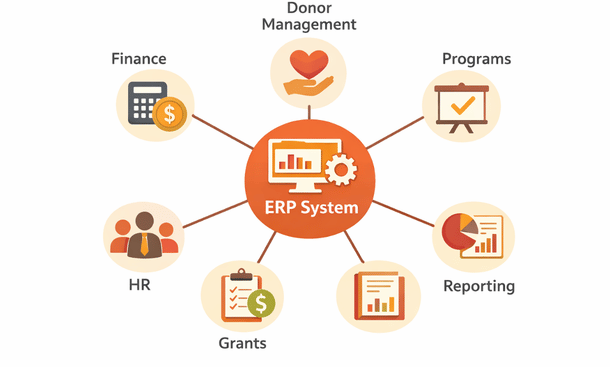
For nonprofits, an ERP system consolidates accounting, donor relationships, grant management, program tracking, inventory, HR, and reporting into a single platform. Instead of jumping between QuickBooks, your CRM, a separate grants database, and Excel spreadsheets, you work from one centralized system where data flows automatically between modules.
The traditional definition comes from the manufacturing world where companies needed to plan resources across production, inventory, and distribution. But modern ERP has evolved way beyond factories. Cloud-based systems now power organizations of all types, and nonprofit-specific ERPs have emerged that understand fund accounting, compliance requirements, and mission-driven workflows.
Why Nonprofits Need Different ERP Solutions
Here’s where things get interesting. You can’t just grab any old business ERP and expect it to work for a nonprofit. The financial structures are fundamentally different.
Nonprofits operate with fund accounting, a system where money is tracked by its source and restrictions rather than just profit and loss. When a donor gives you $50,000 for a specific youth program, you can’t just dump it into general revenue. You need to track that it came from the Smith Foundation, it’s restricted to youth services, and you can only spend it on approved activities before December 2026.
Traditional for-profit ERPs don’t handle this naturally. They’re built around revenue recognition, cost of goods sold, and profit margins. Nonprofit ERPs understand restricted funds, grant compliance, indirect cost allocation, and how to generate statements of functional expenses that break down costs by program, management, and fundraising.
Beyond accounting, nonprofit ERPs recognize that donor relationships are different from customer relationships. A customer buys a product and the transaction ends. A donor makes a gift and starts a relationship that could span decades. Your system needs to track giving history, engagement levels, communication preferences, tribute information, and planned giving commitments in ways that standard CRMs don’t really support.
Grant management is another huge differentiator. Foundations and government agencies have specific reporting requirements, compliance checkpoints, and milestone tracking that corporate project management tools weren’t designed to handle. Nonprofit ERPs build this functionality directly into the platform.
Core Components of Nonprofit ERP Systems
Let me break down what you’ll actually find inside a nonprofit ERP system.
The financial management module handles fund accounting, general ledger, accounts payable and receivable, and budgeting. But it goes deeper—think multi-entity consolidation if you have chapters or affiliates, allocation of shared costs across programs, and audit trail functionality that satisfies the most demanding CPA.
Donor and constituent relationship management tracks everyone who interacts with your organization. Donors, volunteers, board members, program participants, and community partners all live in one database. You can segment audiences, track engagement history, manage campaigns, and generate acknowledgment letters without exporting data to another system.
Grant and contract management modules let you track applications, awarded grants, deliverables, budgets versus actuals, and reporting deadlines. Some systems even automate draw requests and financial reporting to funders, which is a massive time-saver.
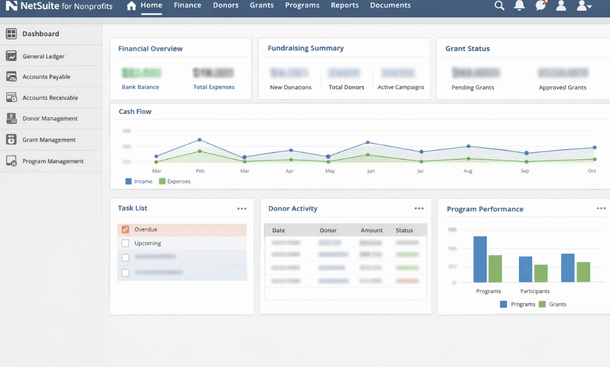
Program management functionality helps you track outcomes, manage case files, schedule services, and measure impact. For a homeless services org, this might mean client intake, case notes, and housing placements. For an education nonprofit, it could track student enrollment, attendance, and academic progress.
Human resources and payroll integration ensures your staff data, time tracking, benefits, and compensation all sync with your financial system. This is especially important for cost allocation when staff work across multiple programs or grants.
Reporting and analytics tie everything together. Nonprofit ERPs generate board reports, IRS Form 990 schedules, funder reports, and executive dashboards without manual data manipulation. Real-time visibility into financial health, fundraising progress, and program metrics becomes the norm instead of waiting weeks for month-end closes.
Real-World Benefits for Mission-Driven Organizations
Let’s talk about what this actually means for your day-to-day operations.
Time savings are massive. One environmental nonprofit in San Francisco told me they cut their month-end close from 15 days to three after implementing an ERP. Their finance team stopped manually reconciling data across five different systems and could finally focus on strategic analysis instead of data entry.
Compliance becomes way less stressful. When auditors show up, you can pull reports instantly. Grant requirements that used to take days of spreadsheet gymnastics now generate automatically. Your 990 preparation goes from a three-month nightmare to a manageable two-week project.
Decision-making improves when you have real-time data. Instead of wondering whether you can afford to hire another case manager, you can see current budget performance, projected revenue, and program costs in one dashboard. Board meetings shift from reviewing last quarter’s financials to discussing strategic opportunities based on current data.

Fundraising becomes more sophisticated. When your development team can see a donor’s complete history—gifts, event attendance, volunteer hours, program connections—in one place, they can craft personalized outreach that actually resonates. Automated acknowledgments ensure nobody falls through the cracks.
Collaboration across departments improves dramatically. Program staff can see budget status without bugging finance. Finance can access program metrics without requesting reports from operations. Everyone works from the same data source, which eliminates the classic “whose numbers are right” debates.
Common Misconceptions About Nonprofit ERPs
Let me clear up some myths I hear constantly.
First, ERPs aren’t just for huge organizations. Yes, systems like these used to cost hundreds of thousands and require IT teams to manage. But cloud-based solutions now serve nonprofits with budgets under $5 million. Monthly subscription pricing makes it accessible, and hosted systems eliminate the need for on-site servers or dedicated IT staff.
Second, implementation doesn’t have to take years. I’ve seen organizations go live in four to six months with proper planning. The key is being realistic about scope, getting executive buy-in early, and dedicating staff time to the project.
Third, you don’t lose your existing data. Migration sounds scary, but modern ERPs have tools and partners who specialize in moving data from legacy systems. You’ll clean up your data in the process, which is actually a benefit.
Fourth, training isn’t impossibly difficult. Yes, there’s a learning curve, but nonprofit ERP vendors design interfaces for non-technical users. Most staff become comfortable within a few weeks, especially with proper onboarding and ongoing support.
Is Your Organization Ready for ERP?
How do you know if it’s time to make the leap?
If you’re managing more than three or four software systems and constantly importing and exporting data between them, that’s a clear sign. When your team spends more time reconciling data than analyzing it, you need better tools.
Growing organizations hit a wall where spreadsheets and disconnected systems can’t scale. If you’re adding programs, expanding geographically, or seeing significant revenue growth, your technology needs to keep pace.
Compliance challenges often trigger ERP conversations. New grant requirements, audit findings, or board concerns about financial controls can be the catalyst. Rather than adding more manual processes, an ERP builds controls directly into your workflows.
If you’re spending serious money on multiple subscriptions—a CRM here, accounting software there, a grants management tool over there—the combined cost might already approach what you’d pay for an integrated ERP. Plus you’d gain efficiency and eliminate duplicate data entry.
Staff frustration matters too. High turnover in finance or development roles sometimes traces back to terrible systems. People don’t want to spend their careers fighting with technology when they could be advancing your mission.
Understanding what nonprofit ERP software is and whether your organization needs it represents the foundation for making smart technology decisions. From here, you’ll want to explore the specific features that separate great nonprofit ERPs from mediocre ones. For a deeper look at must-have capabilities like fund accounting, donor management, and compliance tools, check out our breakdown of essential nonprofit ERP features. And if you’re ready for the complete strategic picture, our comprehensive guide to ERP for nonprofits walks through implementation, vendor selection, and long-term success strategies.
About the Author

mike
Mike is a tech enthusiast passionate about SaaS innovation and digital growth. He explores emerging technologies and helps businesses scale through smart software solutions.
Did you find this helpful?
Your feedback helps us curate better content for the community.